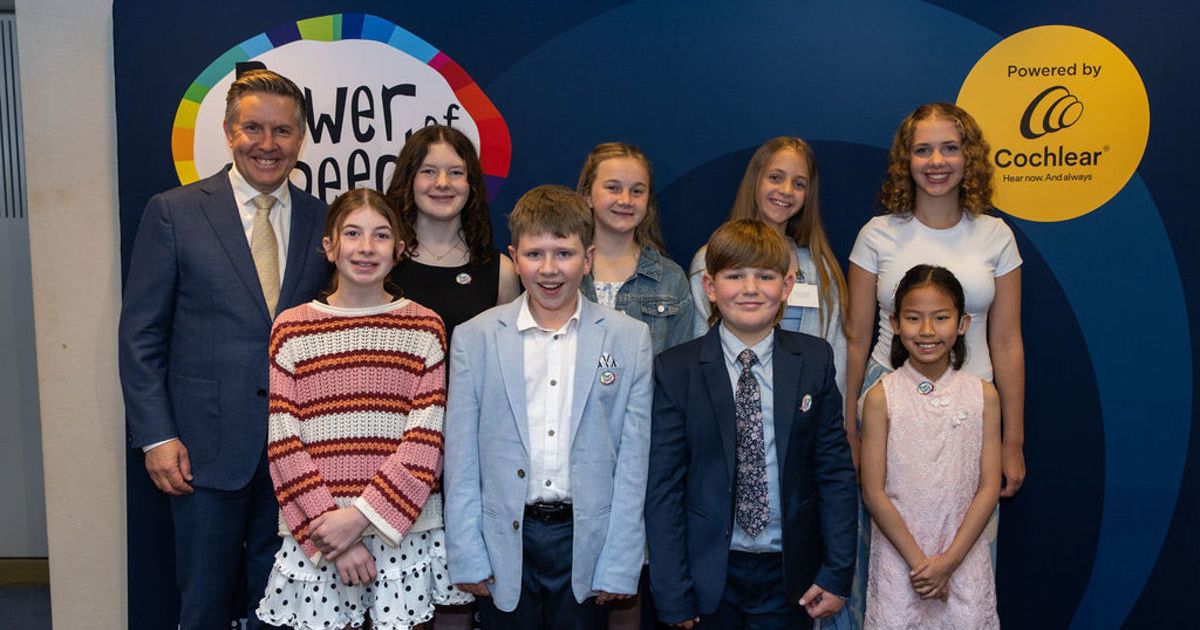
Twelve-year-old Gunnedah student Hallie Childs has addressed a Canberra event about her personal journey with hearing loss.
Hallie was among the guest speakers at the Power of Speech showcase which acknowledges the achievements of children who are deaf and use spoken language to communicate.
One of the primary purposes of the event is to challenge the perceptions of what children with hearing loss can achieve. Children who are deaf or hard of hearing from across Australia and New Zealand address politicians about their experiences as cochlear implant recipients and what can be achieved when children with hearing loss get support early.
Hallie was born profoundly deaf and implanted with Cochlear implants at six months old. She addressed last week’s Canberra gathering as a representative of Next Sense, formerly the Royal Institute for Deaf & Blind Children, a not-for-profit which provides support for people with hearing or vision loss.
“Even though Cochlear implants have always been a part of my life, me and my family have worked really hard along with Next Sense to help me hear, learn and communicate,” Hallie told the event last week.
“For the first few years, we travelled a seven-hour round trip every week so I could attend early intervention in Newcastle. That’s a lot of time in the car.”
Hallie joked that her mum had sung to nearly every song ever written during those journeys.
“I was probably lucky I could only hear some of the words,” she joked.
Hallie praised the support she has received at school and from health professionals.
“During this time, I started working with Miss Simpson, who is my hearing support teacher, and Jo my speech therapist,” Hallie said.
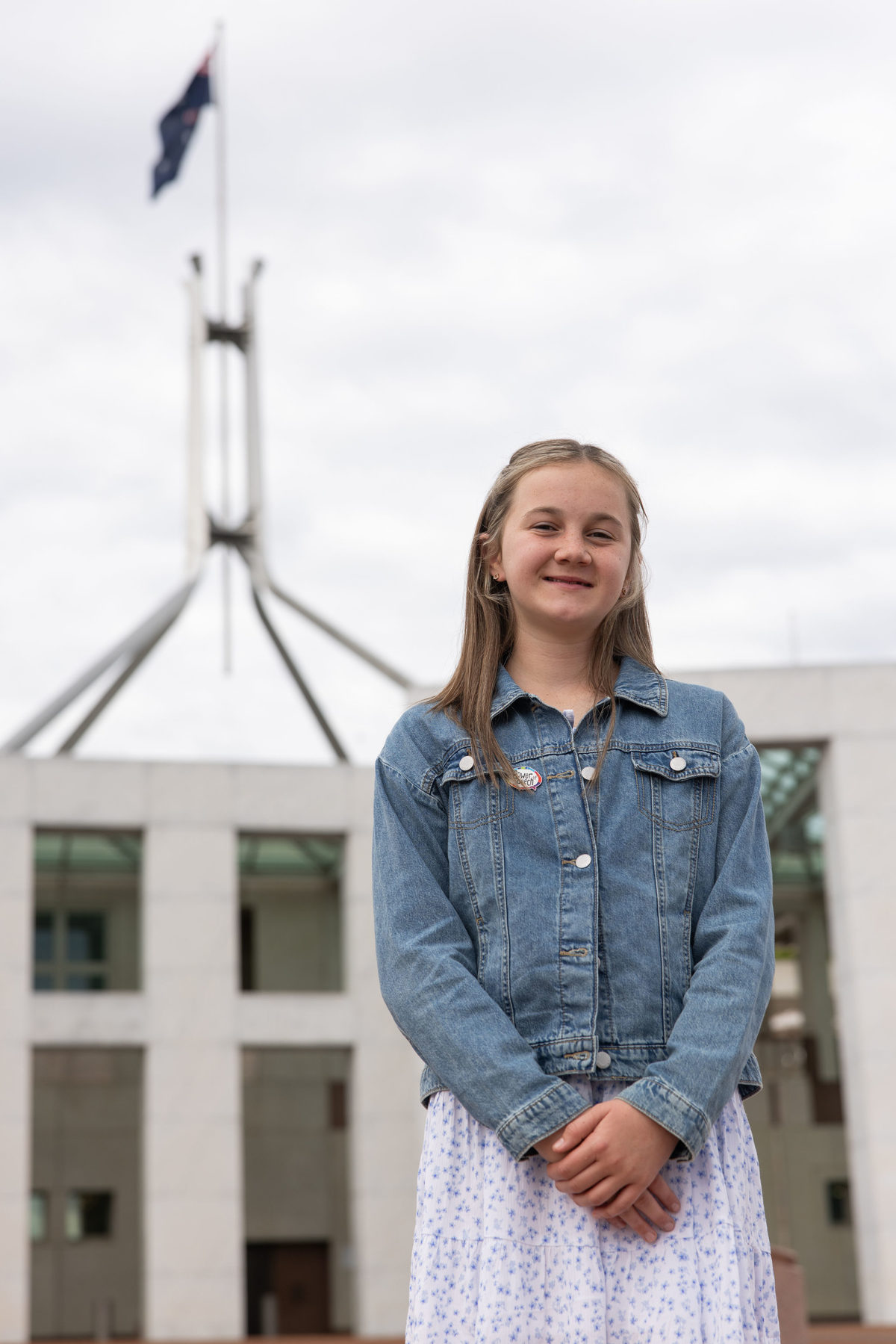
Hallie Childs addressed the Power of Speech event in Canberra last week.
“They have both supported me, my family, and my school as I’ve grown up.
“As I got older, my learning and support continued through weekly Zoom sessions and outreach visits that Next Sense provides in Tamworth.”
Hallie said having hearing loss meant that sometimes she had to work a little harder.
“I might need people to repeat themselves and I have to concentrate more in noisy places,” she said.
“Sometimes I miss parts of conversation, so I just smile and nod, although most of the time I eventually realise I’ve just agreed to something I definitely was not meant to.”
Hallie told the gathering hearing loss has not gotten in the way of doing the things she loves the most.
“I love camping with my family and going to the beach,” she said.
“I represent my town for netball and my school for soccer, basketball, and netball.
“All the support I’ve received over the years has helped me become more confident and independent.
“It has also prepared me for starting high school.
“I am very thankful for everyone who has helped me along the way.”
Chris Rehn, First Voice co-chair, provided the opening address to last week’s event and said he had always been inspired by the courage, dedication and achievements of the speakers, and by the unwavering support of their families. He has attended every Power of Speech event since it started.
“The young people taking the stage today will show us what timely support can make possible. They will share their stories with confidence and pride, and speak about their hopes and ambitions for the future,” Mr Rehn said.
“Australia has been a world leader in newborn hearing screening, hearing technology and specialist early intervention. But screening is only the first step.
“The earlier a child accesses specialist support, the stronger the foundations they can build for language, learning and participation.
“Currently, many families face the complexity of navigating a complex disability funding system at a time when they should be focused on their child.
“We believe there is an opportunity to provide a more streamlined and responsive approach for children 0–4 years with hearing loss, such as a strengthened Hearing Services Pathway.
“Hearing loss is unique. Once a diagnosis is confirmed, the need for specialist support is known and it is time-sensitive. Families should be able to move from diagnosis to support promptly and seamlessly.”
To order photos from this page click here