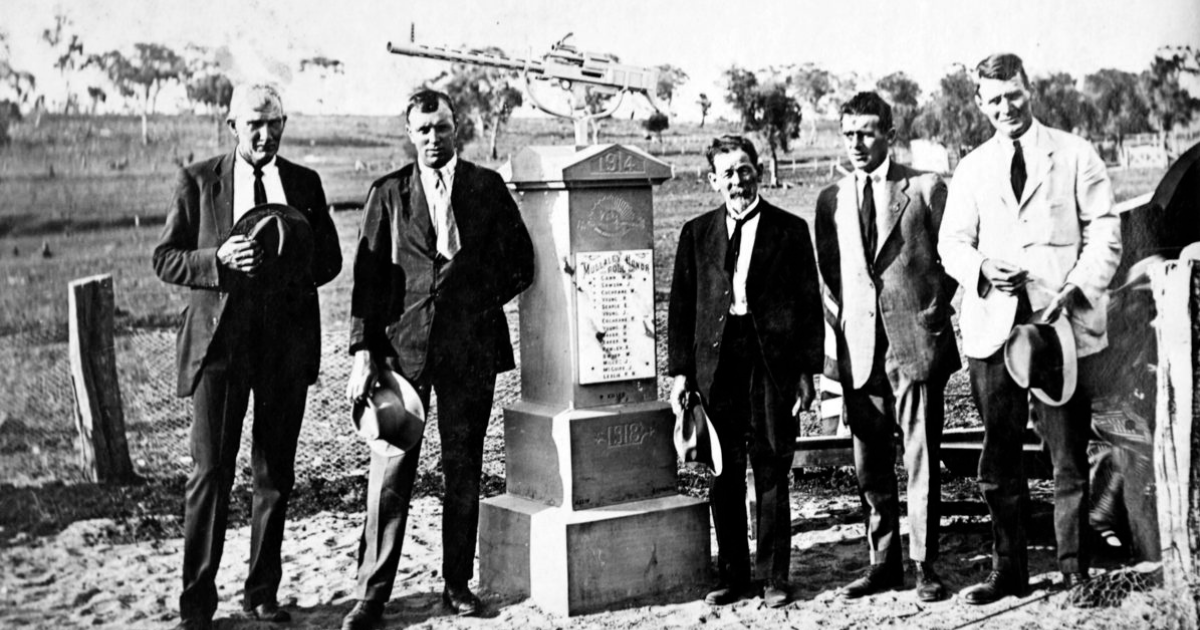
In the lead-up to Remembrance Day 2026, it is fitting to remember some of the brave local soldiers who helped to defend the right for freedom on the battlefields of Europe.
Extract from In The Line of Fire edited by the late Ron McLean:
Louis John (Jack) Mathias was a highly decorated serviceman from the Gunnedah district in World War 1, with three awards for bravery. He won the Military Medal and Distinguished Conduct Medal and Bar for his separate actions under fire in the closing months of the war, as the Germans mounted a desperate, last-ditch counter-offensive.
Jack Mathias was born at Walgett, went to school in Gunnedah and was a dam-sinker and rural worker in the Narrabri, Gunnedah and Coolah districts before enlisting at Coolah in February 1916, a few weeks short of his 30th birthday. He sailed from Australia on 4 May, 1916, as a member of the 33rd Battalion, C Company. Before his despatch to France with his battalion, he was promoted to corporal in late 1917. Described in war papers as “a capable and courageous leader and fearless fighter,” Mathias was tall and sturdily built and a natural leader of men, which led to his promotion to Sergeant and then temporary Sergeant Major through 1917.
On 4 April, 1918, he was awarded the Distinguished Conduct Medal (D.C.M.) for “exceptional courage, initiative, skill and able leadership” between September 1917 and February 1918. A fortnight later, however, he had been gassed and wounded by an exploding shell at Villers-Bretonneux and, as a result, spent three months in hospital in England.
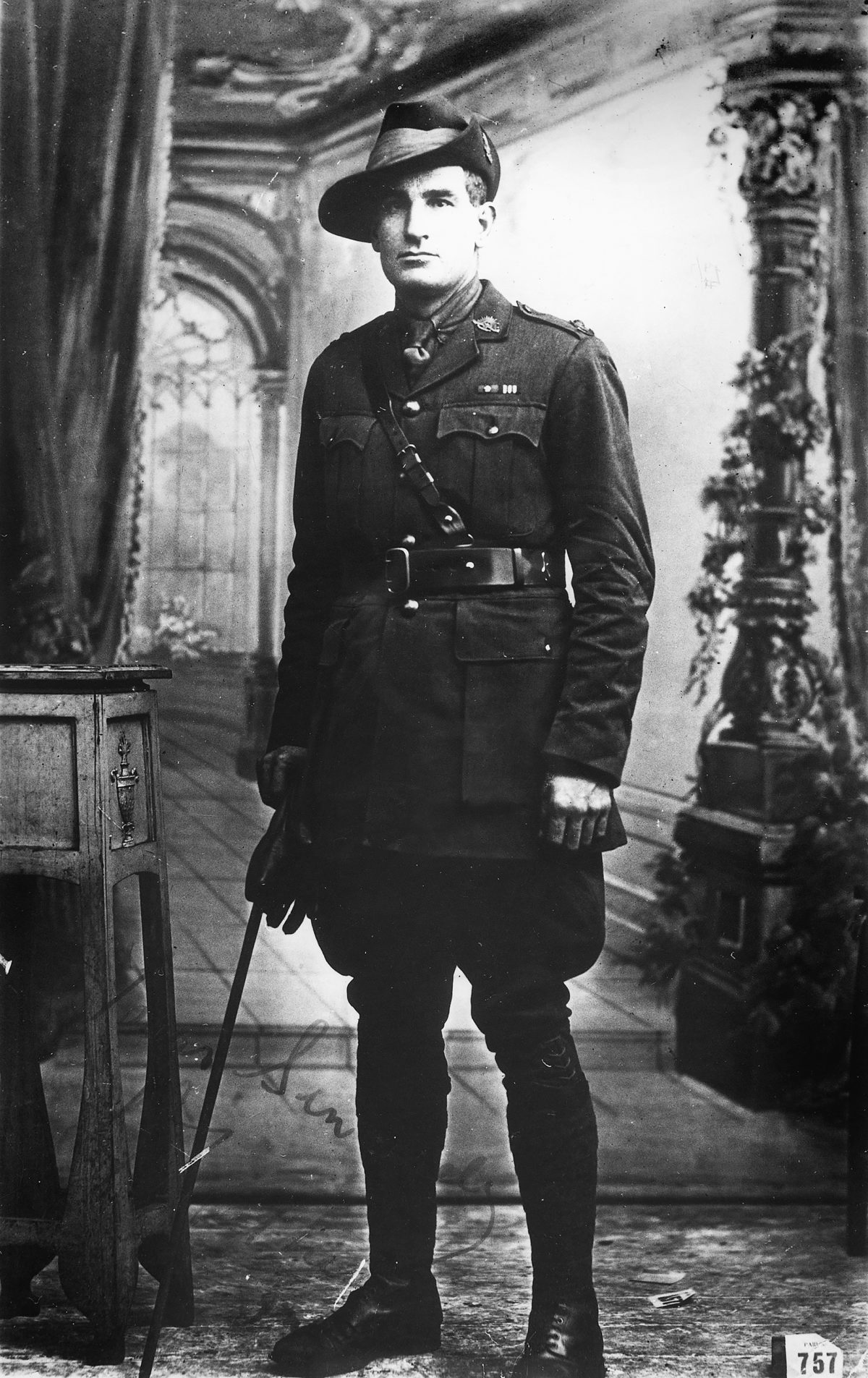
Portrait of Lieutenant Jack Mathias, D.C.M. and Bar and Military Medal, 33rd Battalion. The photograph may have been taken by a French couple, Louis and Antionette Thuillier, in the village of Vignacourt, behind the Somme battle lines. The Thuilliers photographed thousands of Australian Diggers in their farmhouse studio, the glass-plate negatives lying in trunks in a musty attic for almost a century before they were found. Hundreds of these images of Australian soldiers are published in the book, The Lost Diggers, by Ross Coulthart.
Back at the front in late July, he was awarded a Bar to the D.C.M. for action on 8 August as Australian troops advanced through Accroche Wood. Sergeant Major Mathias led four men through the thick wood towards enemy emplacements, capturing three enemy strongpoints, killing three enemy soldiers and taking 16 prisoners. Although cut off from his company by dense fog, he continued his advance, capturing another field gun which was firing on troops, killing two gunners and taking two prisoners. The citation praised his leadership, courage and inspiring influence on all ranks.
Mathias was awarded the Military Medal for his actions near Bouchavesnes in the battle for Mont St. Quentin on 31 August. With a small party he tackled strongly defended German positions and captured a large number of prisoners. He then assisted his commanding officer in capturing a quarry and establishing defensive posts.
In September, Mathias joined an officers’ training school in England, which saw him commissioned as a lieutenant, before the end of the war and his return to Australia in mid-1919.
After the war he obtained a soldier settler farm at Oban, Coolah. In the mid-1920s, however, he went to Sydney to work as a wharf labourer, returning to the country for seasonal work as a shearer. He died in Sydney on 21 June, 1965, aged 79 years.
To order photos from this page click here