Extract from In The Line of Fire edited by the late Ron McLean:
A significant anniversary passed quietly last week with history recording the famous Charge of the Lighthorse at Beersheba on 31 October, 1917, and the heroism of the Australian Lighthorse in a surprise attack on the Turkish lines at full gallop.
Several Gunnedah and district soldiers took part in the attack, including Roy Fraser Strachan, who was the son of a local police officer. Roy Strachan went right through the Great War, serving on Gallipoli and in the desert campaign in Egypt and Palestine – only to die suddenly a few months after the war’s end.
Born in Gunnedah, Roy Strachan was one of the first locals to enlist, signing up on 14 September, 1914, just six weeks after the declaration of war. He was 22 years and five months old and at the time of his enlistment, his father was officer-in-charge of Boggabri Police Station.
It was literally “a baptism of fire” for the young trooper, who was attached to the 6th Light Horse Regiment sent to the Gallipoli Peninsula on 15 May, 1915, as part of the third landing force of the A.I.F. In early October, he was transferred to the Australian Army Medical Corps (A.A.M.C.) but like thousands of others, he contracted diarrhoea and jaundice during the early onset of a bitterly cold winter and was taken to Malta for 27 days for treatment. By the time he recovered, the Gallipoli campaign had been abandoned.
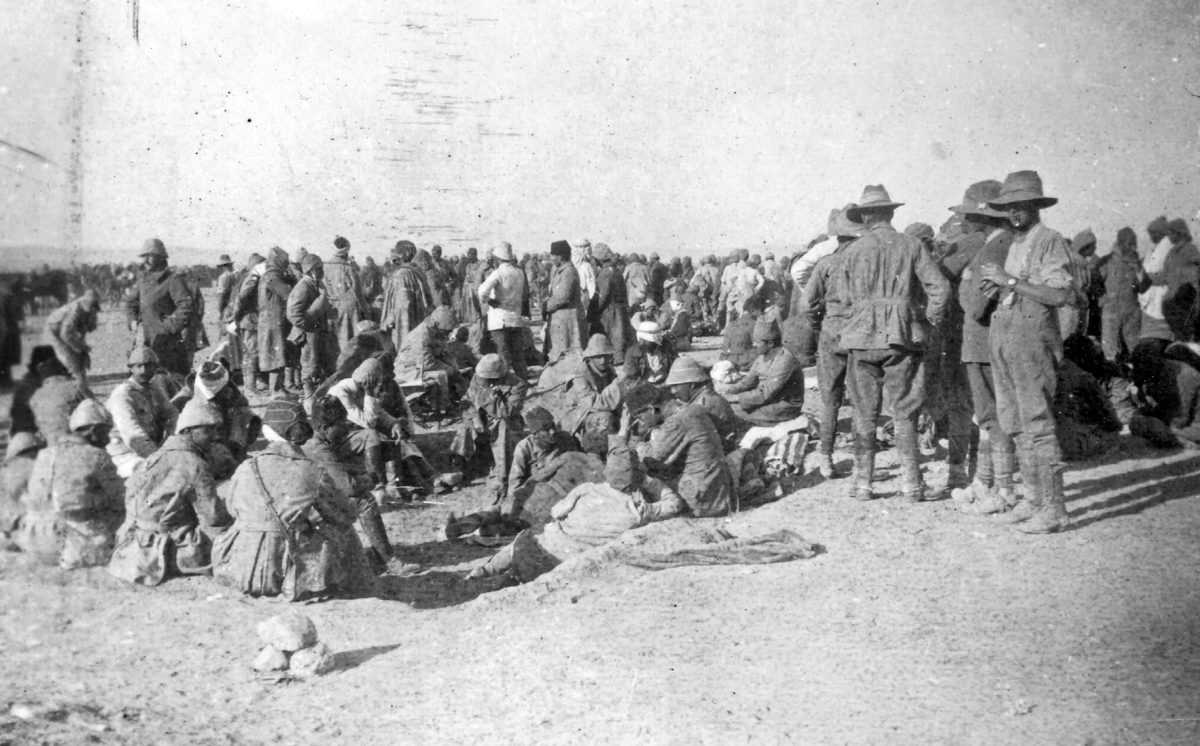
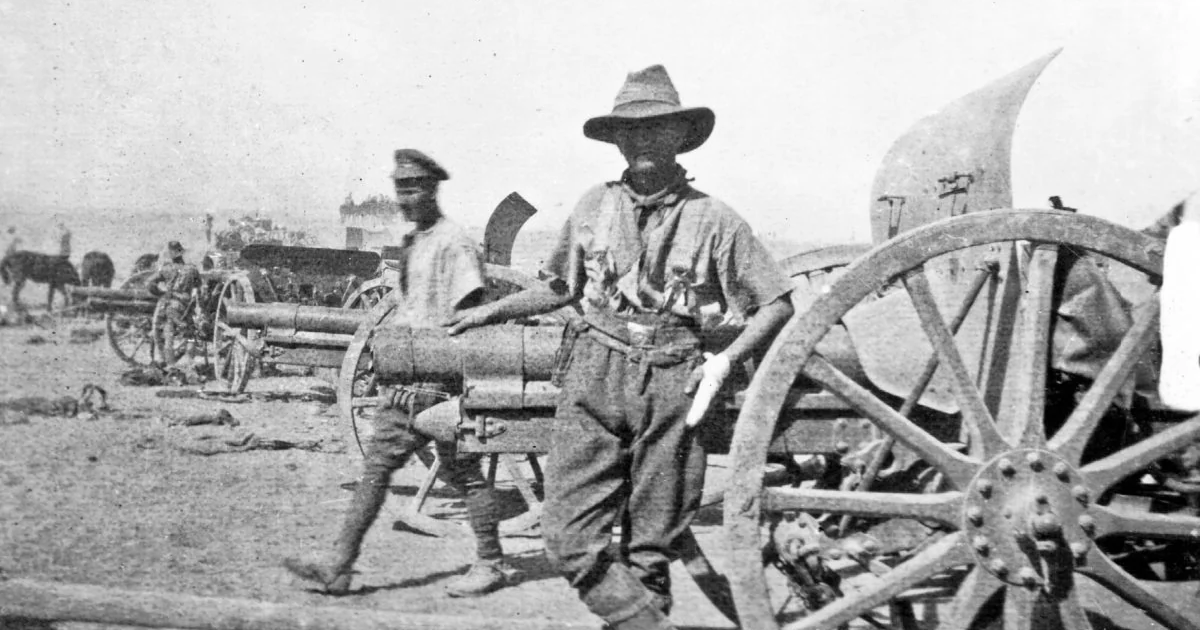
After the charge of the Light Horse at Beersheba on October 31, 1917. The photographs were taken by Curlewis Light Horseman Trooper Rex Stanger. Australian horsemen with captured Turkish (Ottoman) troops.
Back in Egypt, Roy Strachan returned to the Light Horse and was promoted to Corporal. He was involved in most of the campaigns in Egypt and Palestine and in mid-1917 he was commended for bravery for rescuing an officer under heavy fire.
Trooper Strachan’s name was recorded in the annals of history when in late October 1917 he took part in the charge of the Light Horse at Beersheba, where he received a gunshot wound to the left side and was taken to Cairo for treatment.
Wounded a second time in 1918 and in poor health, Lance Sergeant Strachan was listed for return to Australia in July, on nursing duties on the Port Darwin. On 18 August, he was admitted to the ship’s hospital with a condition known as pacclycardia, described as “irritable heart”. With little improvement in his general health, doctors confirmed him for discharge just a few weeks after the end of the war.
On 11 January, 1919, came the announcement from Base Records Office in Melbourne that Lance Sergeant Roy Strachan had been awarded the Military Medal for bravery in the field.
Sergeant Strachan’s father, by then the Inspector of Police at Yass (NSW), wrote a few months later, advising that his son had died in Marrickville Hospital on 11 April that year and asking Base Records to send the Military Medal direct to the family “without any formal presentation,” as the soldier’s mother would not be able to attend.
Forwarding the medal, Base Records extended “deep, personal sympathy” in the loss, describing the soldier as “one of those whose magnificent conduct on the field of battle helped to earn for our Australian soldiers a fame which will endure as long as memory lasts”.
The famous charge of Beersheba by the Australian Light Horse in the Palestine desert in October 1917 was the last great cavalry charge in military annals.
Lieutenant-General Harry Chauvel, Commander of the Desert Mounted Column, unleashed the 12th Light Horse Regiment, supported by the 4th Regiment, against entrenched Turkish positions late on the afternoon of October 31. With rifles slung and bayonets flashing, the horsemen charged “straight at it,” putting the Turks to flight.
The appearance of the thundering mass of Australian horsemen so shocked the Turkish defenders that, after applying initial heavy fire, panic set in. The Turks failed to lower their sights as the Australian horsemen charged the line, jumped the trenches, dismounted and engaged in bayonet contact. The Turks, terrified of the Australian steel, quickly surrendered.
The Light Horse had set its sights on breaking the Turkish defensive line, stretching from Gaza on the Mediterranean coast to Beersheba, an oasis of wells 35km inland. The battle plan was to take Beersheba and roll up the Turkish defence from the flank. The element of surprise and the daredevil nature of the Light Horsemen turned the engagement into a rout.
Commanded by Brigadier-General William Grant, a Darling Downs pastoralist, the Light Horse Brigade assembled in squadron formation, in three lines from 300 to 500 yards apart, on the outskirts of Beersheba. In the late afternoon light, with the horses casting long shadows, troop after troop moved into position. At 4.30pm the 12th Regiment from northern New South Wales, stationed on the left, and the 4th Regiment on the right, moved off at the trot, 6km east of the oasis.
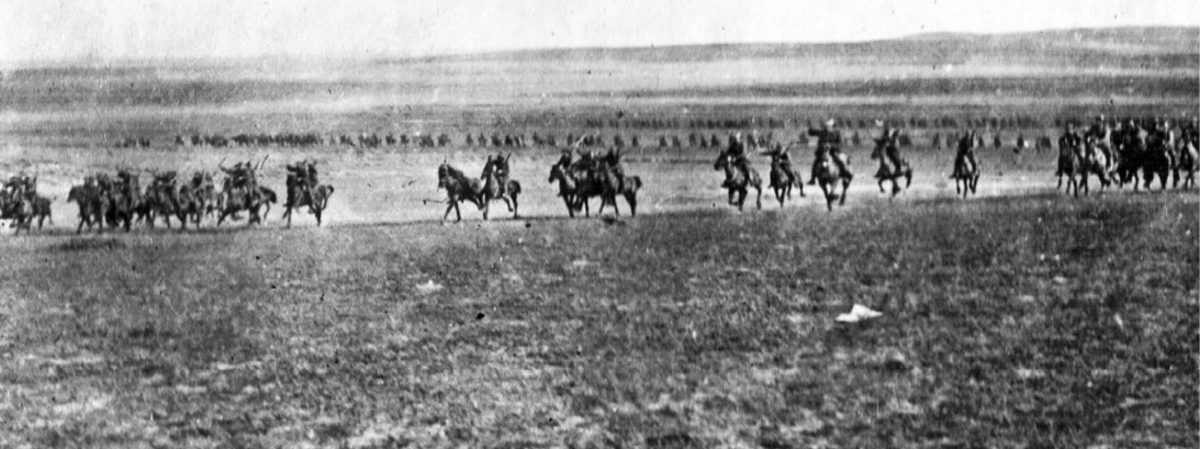
In formation and at the gallop. Australian Light Horsemen galloping towards the Turkish guns at Beersheba.
Almost at once the pace quickened. The Turks were quick to observe the movement and opened fire with shrapnel. But the range was long, the target scattered and fleeting, and the casualties were minimal. From the crest of a ridge, the wells came into full view. The course of the Australians lay down a long, slight slope, bare of growth and other cover. It was then that Chauvel gave the famous order to “charge straight at it”.
It was pure cavalry adventure. Lieutenant-Colonel Donald Cameron, of Scone, was in command of the 12th, Major Jack Lawson, a powerful Yorkshireman, was in charge of the leading squadron of the 4th, and Major Eric Hyman, a Tamworth grazier, led A squadron of the 12th into the tumult of battle.
Horses in the front line were hit and dropped but there was no checking the charge. The enemy fire only served to speed up the gallop. As the horsemen came within half a mile of the Turkish entrenchments, the number of casualties fell with the Turks unable to adjust their sights, their fire passing harmlessly overhead.
The Australians leapt the main trench, dismounted and went to work with their bayonets. The Turks were so demoralised that they offered only feeble resistance. After 30-40 Turks had been killed, the rest threw down their rifles and begged for mercy.
Major Hymen’s progress was brilliant and decisive. The horsemen also engaged the Turks with rifle and bayonet but this time encountered strong resistance. Around 60 of the enemy had died, many by gunshot, when the Turks surrendered.
Major Cuthbert Murchison Fetherstonhaugh, a Coonamble grazier and a Boer War veteran, was within 30 yards of the trench when his horse was brought down. Fetherstonhaugh put his animal out of its misery, rushed on into the trench and emptied his revolver on the enemy, before being shot through both legs. The Turks took off for the hills, the horsemen in hot pursuit.
Beersheba yielded 738 prisoners, 90 artillery guns, three machine guns, railway rolling stock and a large number of animals.
The 12th Light Horse lost 20 of its number and 19 wounded with 44 valiant horses dead. Among those who died was Australian Test cricketer, fast bowler Albert (Tibby) Cotter, who was shot dead as he galloped over the Turkish trenches.
For their action that day, Cameron and Hymen received the Distinguished Service Order (D.S.O.). Tamworth horseman Lieutenant Rodney Robey was awarded the Military Medal for his daring raid on the western part of the town to flush out the Turks.
In 2004, on the 87th anniversary of the charge of Beersheba, the 12th/16th Hunter River Lancers formally exercised their right of freedom of entry to the Shire of Gunnedah, an honour extended to the unit in view of its close association with Gunnedah for almost a century.
The famous Charge at Beersheba was immortalised in the 1987 film The Lighthorsemen.
To order photos from this page click here