


MARIE HOBSON, GUNNEDAH AND DISTRICT HISTORICAL SOCIETY
It is not widely known that Gunnedah once boasted three picture theatres, with the open-air Garden Theatre the most popular venue during the long, hot summers.
Many older residents would remember the Garden Theatre of their childhood, where patrons sat back in deck chairs to enjoy the show.

In cold or rainy weather, a big canvas like Worth’s Circus tent was pulled over the top and coke fires were lit in the aisles, with patrons given a blanket as they came through the entrance. It is hard to imagine that happening in the litigious world of today.
James Grant Ogilvie was instrumental in forming the Gunnedah Amusement Company Ltd, which included shareholders George Coffin, Alex Clements, Hubert LeCussan, William LeCussan and Thomas Lorenz, to screen silent films popular during the years of the first world war.
The theatre was on the former site of the Ampol service station in Marquis Street (opposite today’s taxi rank) and it was in operation when the Wallaby Recruitment March came through Gunnedah in 1915.
The first screening was held at an open-air theatre on the corner of Conadilly and Marquis Streets and later at the MUIOOF Hall, on the corner of Chandos and Barber Streets – particularly during the winter months.
The modern new Civic Theatre, built on the site where Aldi is now located, opened in July 1936.
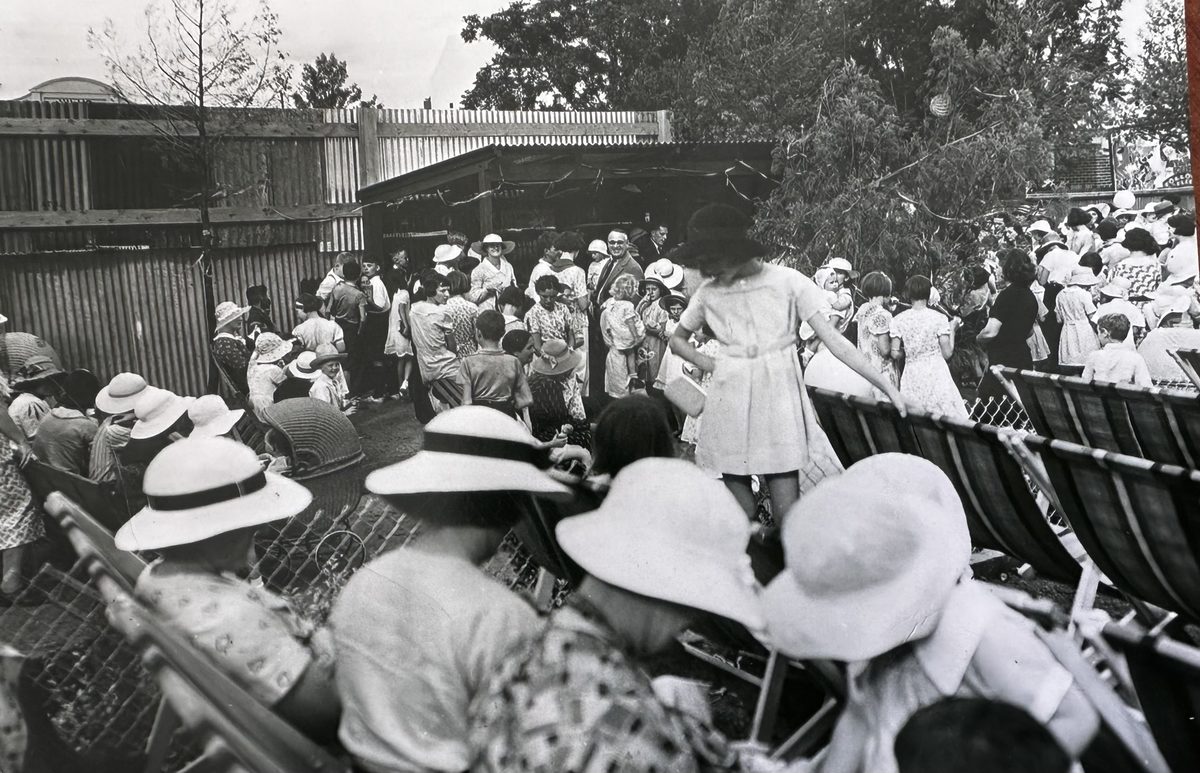
The Garden Theatre was on the former site of the Ampol service station in Marquis Street (opposite today’s taxi rank).
Doctor Colin Anderson, Kelly Wise, Hector Ross and James Ogilvie were the major shareholders and a struggle began to attract patrons to both the Civic Theatre and the Garden Theatre.
Projectionist Reg Maunder’s childhood fascination with theatre was fanned by the owners of the Garden Theatre, Ray Hamilton and Wright Thompson, and he eventually became the projectionist at the theatre, along with Cyril Launders.
The outdoor Garden Theatre was especially popular in the summer because there was no air-conditioning in homes at that time – Reg Maunder would stand in a brick operating box lined with tin with sweat pouring down his legs, while a teenage boy was paid to run the films between each theatre on Saturday nights.
Competition became very fierce between the two theatres and the Garden Theatre was eventually bought out by the owners of the modern two-storey Civic in 1939, with Reg Maunder going to The Civic to work as a projectionist with Merv Ogilvie and Tom Harrigan.
One of the biggest productions shown was Lady Hamilton, starring Vivien Leigh and Laurence Olivier; and patrons had the choice of seeing it at The Garden Theatre or The Civic, with the billboard claiming that she was ‘The Woman Whose Romance Changed History’.
Other big movies to show at the Garden and Civic Theatres were Gone With The Wind, Most Spectacular, San Francisco, Clive Of India, Mutiny On The Bounty and Three Coins In The Fountain, which came when the Civic installed cinemascope.
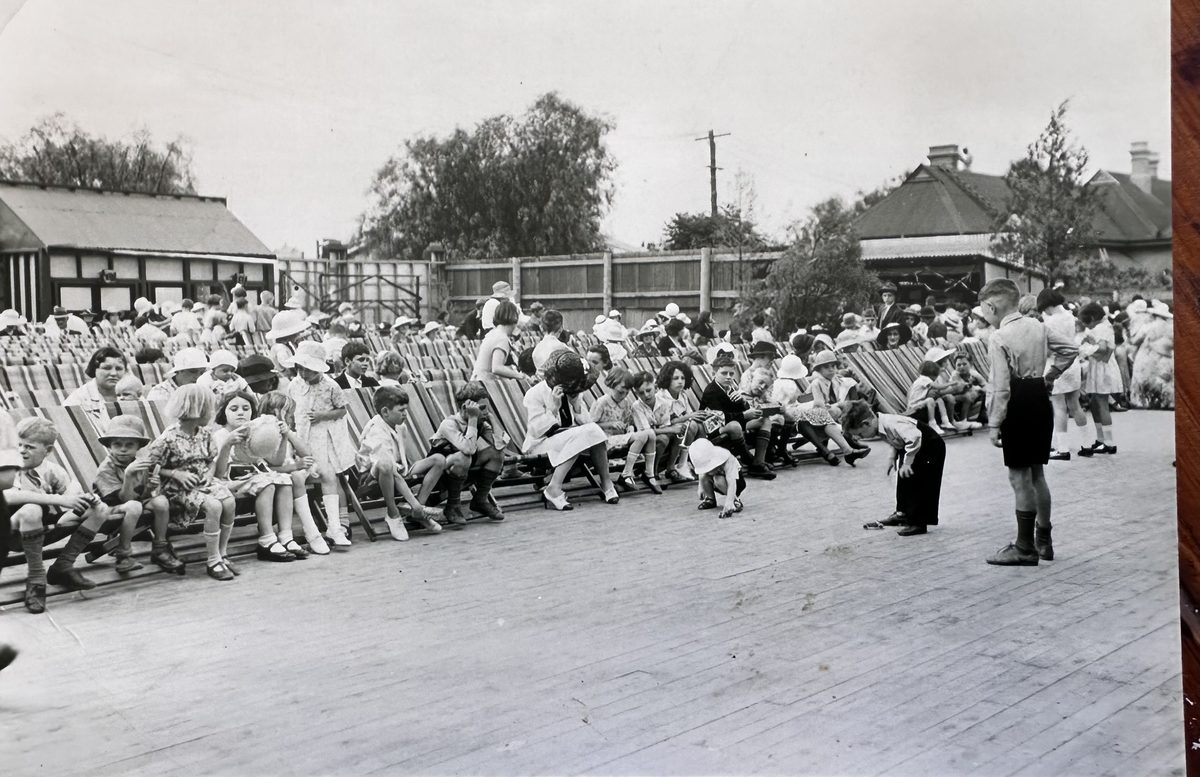
This photograph, showing the back of the Bank of NSW (now Westpac), was taken in the mid-1950s. The deck chairs were a problem for youngsters who could not see over them. The building in the background is the ticket box and canteen, which sold the best ginger beer. Photos: supplied.
Theatre was so popular after the war that plans were made for the construction of a second theatre by the Civic Theatre Pty Ltd, whose shareholders were by then drawn from people all over the Gunnedah district.
The plan was to demolish the Garden Theatre, with its limited use due to seasonal conditions, and build a second modern theatre on the site. The theatre was to be known as The Savoy, but with escalating costs the idea was soon abandoned and the Garden Theatre lived on until television arrived in Australia and picture theatres started closing down all over the country.
The Garden Theatre was the first to go in Gunnedah, effectively ending the joy of sitting in the cool night air to watch a popular movie of the day.
The Garden Theatre in Marquis Street was very popular in the summer.
The photograph at left, showing the back of the Bank of NSW (now Westpac), was taken in the mid-1950s.
The deck chairs were a problem for youngsters who could not see over them. The building in the background is the ticket box and canteen, which sold the best ginger beer.


