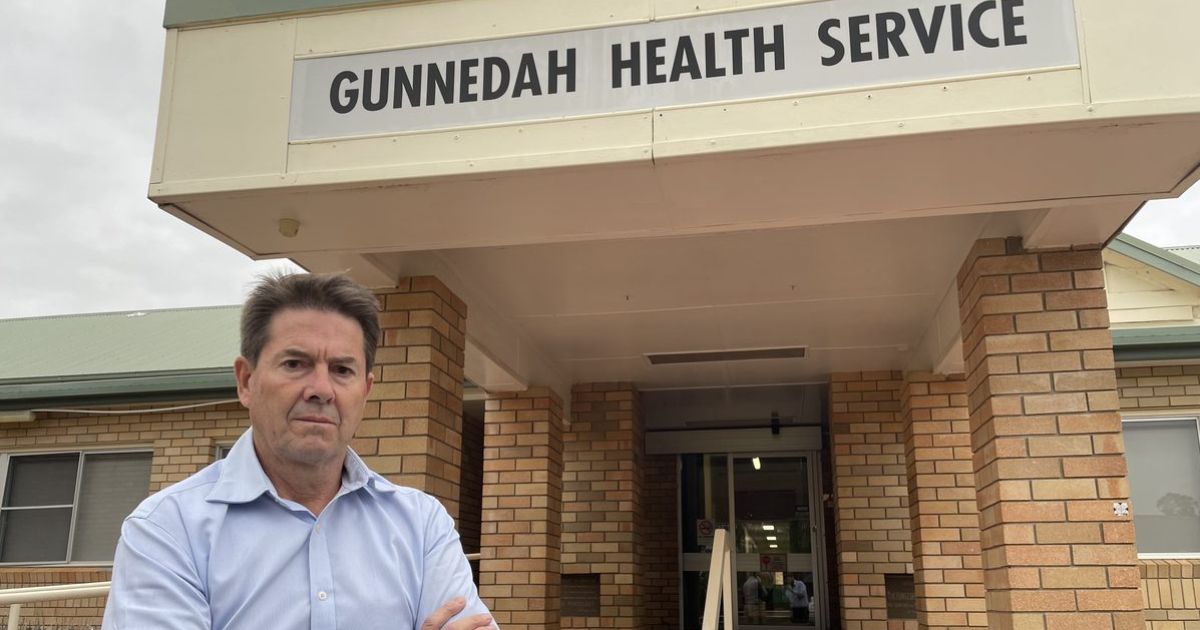
Birthing services continue to be unavailable at Gunnedah Hospital, with health officials citing recruitment difficulties as the primary cause.
The issue has again resurfaced with Member for Tamworth Kevin Anderson and Gunnedah-based Member of the Legislative Council Sarah Mitchell voicing their concern that fully-staffed maternity facilities are inaccessible at the recently upgraded hospital.
Gunnedah Hospital received a $53m redevelopment which included new birthing facilities.

Hunter New England Local Health District confirmed that local women are unable to use the new birthing facilities, but stressed that the current arrangements are only a temporary measure while recruitment efforts continue.
“We remain committed to providing safe, high-quality maternity care that is evidence-based, respectful, and woman-centred,” a health district spokesperson said.
“Maternity services in NSW are networked to support women and their babies to receive the safest care at the most appropriate facility, regardless of where they live.
“We recognise that most women prefer to give birth close to home, and we apologise that they cannot currently plan to give birth at Gunnedah Hospital.”
In a statement shared with the Gunnedah Times, the spokesperson said ongoing recruitment efforts have so far been unable to secure GP obstetricians to support birthing services at Gunnedah Hospital, with recruitment of GP obstetricians and midwives remaining a challenge nationwide.
While birthing services remain unavailable, the health district confirmed that midwives continue to provide a range of pregnancy and postnatal services including pregnancy care and education, postnatal care following discharge from a birthing facility, breastfeeding and infant feeding support, and baby checks and weighs.
“Midwives work with individual women regarding their birth plan, including which hospital is most appropriate for them to birth,” the spokesperson said.
“For many women, this will be Tamworth Hospital, but for some women, John Hunter Hospital may be the most clinically appropriate.
“For the safety of women and babies, women who present in labour are transferred to the most appropriate service for birthing and patient transport is offered to return to Gunnedah for postnatal care.
“We acknowledge the burden on women and families who may need to travel for some appointments and give birth.
“Work is underway to strengthen outreach services and explore continuity of care models that could better support women in Gunnedah throughout pregnancy and after birth.”
The spokesperson said the health district also continues to actively recruit and retain maternity staff across its operating area.
“A number of midwifery staff at Gunnedah Hospital are receiving the NSW Health Rural Health Workforce Incentive as part of a strategy to support and build our workforce,” the spokesperson said.
“Incentive packages may include a range of additional benefits including salary boost, sign-on bonuses and retention payments of up to $20,000 a year, relocation assistance and housing, additional leave, and access to training and education.”
Mr Anderson, who is deputy leader of the NSW Nationals, said the $53m Gunnedah Hospital redevelopment was funded and planned by the former Coalition government as a project that would secure the future of health service delivery in the Gunnedah region.
“Under Labor, the hospital has gone backwards, with Labor scaling back the redevelopment, failing to staff maternity services and cutting other essential services like renal and chemotherapy,” Mr Anderson said.
“For all their song and dance in opposition, it’s unacceptable that Labor has failed to recruit the obstetricians required to run our brand-new birthing suite, leaving it to gather dust while mothers are forced to travel to give birth.”
Mrs Mitchell, who is the shadow minister for health and regional health, said families should be able to give birth close to home no matter where they live.
“This isn’t just a Gunnedah issue. Women across regional NSW should not have to worry about giving birth on the side of a road,” Mrs Mitchell said.
“Regional families need and deserve equal access to maternity services. Expecting parents in regional and rural NSW deserve so much better.”
To order photos from this page click here