The NSW government has abandoned plans to progress a proposed pipeline from Keepit Dam to Tamworth, following strong objections from downstream communities and water users, with the project’s costs also a significant factor.
The proposed pipeline was expected to cost more than $340 million, with a further $13.6 million in investigations and planning required before it could be construction-ready.
“I have made the decision not to proceed with spending more money on another business case and another pipeline,” said NSW Water Minister Rose Jackson.

“I want to assure the Tamworth community we take their water security very seriously as an important and growing regional hub,” said Ms Jackson.
“We have already invested significant sums of money alongside Tamworth Regional Council and are now prioritising the work to properly operate the Chaffey Pipeline.
“I also want to assure other communities and water users in the region that I have heard their voices and will not be pursuing options that put more pressure on stretched water resources like Keepit Dam.”
Tamworth Regional Council released a draft water security plan on October 28, proposing a pipeline from Keepit Dam to the Calala Water Treatment Plant as an option to improve the city’s resilience during drought.
Local representatives, councils, groups and water users united in opposition, arguing its potential flow-on effects for downstream communities and their water security were too high a price to pay.
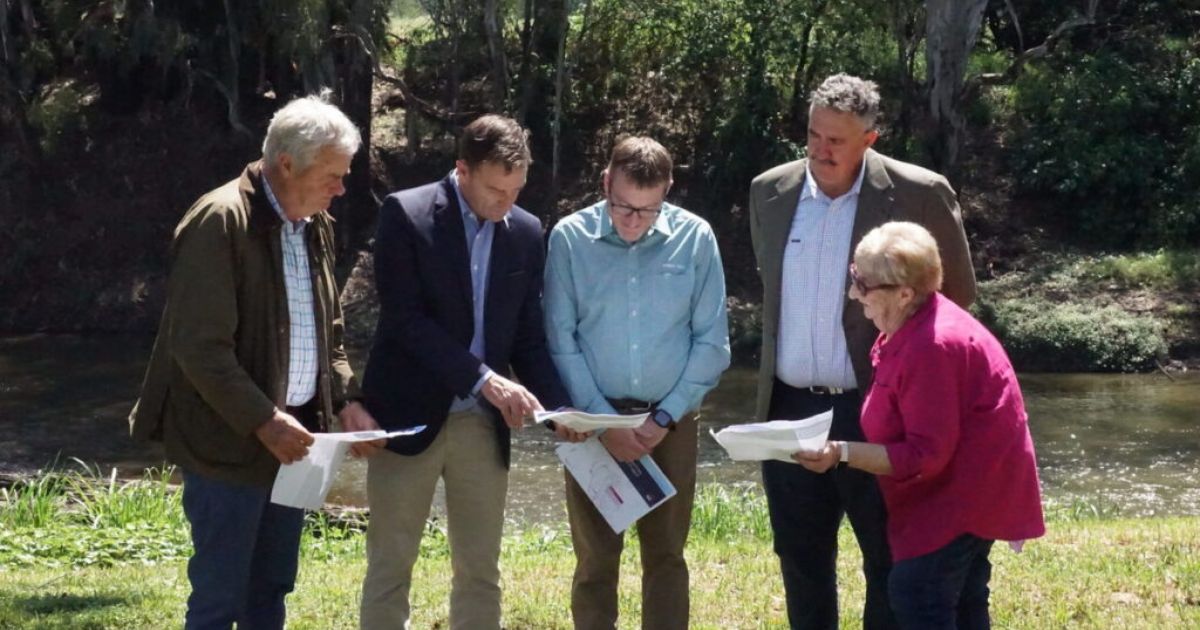
Before the proposal was scrapped, Member for Barwon Roy Butler warned the draft plan would be “fundamentally unfair.”
“Keepit Dam on the Namoi River is a key resource that provides critical human needs, keeps crops irrigated and maintains strong communities downstream,” he said.
“While towns such as Narrabri rely on sub-artesian bore water rather than river water, the district’s irrigators are major contributors to the local economy,” added Mr Butler.
“A growing Tamworth is good for the region, but not at the expense of downstream irrigators and downstream economies.”
The seven councils of the Triple R Water Security Alliance – Liverpool Plains, Gunnedah, Narrabri, Walgett, Brewarrina, Bourke and Central Darling – expressed their “strongest opposition”, warning one regional centre’s water security must not come at the expense of communities downstream.
Alliance chair and Narrabri Shire mayor Darrell Tiemens said the councils recognised Tamworth’s need for long-term water security but would not accept a solution that placed other communities at greater risk.
“This is not about Tamworth versus the rest of the region. It is about fairness, sound water management and recognising that every community has a right to a secure water supply,” argued Cr Tiemens before the proposed Keepit pipeline was abandoned by the state government.
“We will not accept a situation where water security is improved upstream by transferring the drought risk downstream.”
Gunnedah Shire mayor and Alliance deputy chair Colleen Fuller OAM said the proposal raised serious concerns for communities and industries throughout the Namoi Valley.
“Keepit Dam is not an endless supply of water. It is the lifeblood of the Namoi Valley, supporting our towns, agricultural industries and thousands of jobs,” said Cr Fuller.
“During the last drought, Keepit Dam was virtually empty. Our communities know only too well what that means.
“Tamworth has every right to plan for its water security, but not at the expense of communities downstream.”
Namoi Water executive officer Mick Coffey said the organisation opposed pipelines, storage reservations and changes to allocation rules that would redirect Namoi water to Tamworth.
“Namoi Water’s position is unequivocal. We oppose water being taken, reserved or reallocated from Keepit or Split Rock dams to supply Tamworth,” Mr Coffey said.
“We support Tamworth securing its water future. That cannot come at the expense of the water security, livelihoods and future of communities across the Namoi Valley.
“The water in these dams already supports existing users, agricultural production, downstream communities and environmental requirements. It is not surplus water waiting to be redirected.”
Member for Parkes and former Gunnedah mayor Jamie Chaffey told ABC New England North West Radio on 4 November that a pipeline would leave communities fighting over scraps. He said more storage in Tamworth’s catchments was the best way to address its water security needs and enable future growth.
On 5 November, NSW Water Minister Rose Jackson announced the government would not proceed with a Full Business Case or construction of the pipeline, instead prioritising approvals to activate the existing Chaffey Dam Pipeline.
“Right now, Tamworth’s water storages remain in a strong position. This is the right time to make some decisions about how to address future challenges, before they emerge,” said Minister for Water Rose Jackson.
“We take the risk of drought very seriously and know how quickly conditions can change.
“The Chaffey Pipeline was built in 2019 at a cost of tens of millions of dollars, but it has been sitting unused for years because the work to secure necessary approvals wasn’t prioritised.
“Given these circumstances, I have made the decision not to proceed with spending more money on another business case and another pipeline.”
The media statement released by Ms Jackson’s office said the Preliminary Business Case had recommended the Keepit pipeline as the preferred major infrastructure option, but the Minister had instructed that work towards a Full Business Case not continue.
“This decision was based on the significant objections to this proposed solution from downstream communities and water users, and the costs associated with the proposal.
“Further work to make the project construction ready, including a Full Business Case, is estimated to cost $13.6 million, with the final project likely to cost over $340 million.
“Delivery of a Full Business Case and construction of a major infrastructure solution would also have taken years, while communities need practical solutions much sooner when drought conditions start to emerge.”
The government also ruled out an Advanced Water Treatment Plant to produce recycled water for industrial use, with its Full Business Case finding it would not deliver enough water security benefits to justify the investment.
Instead, it will prioritise approvals for the Chaffey Pipeline and continue water-saving measures, including the $55 million Calala to Dungowan pipeline, which is helping save up to 2.2 ML of water per day, and an Active Leak Detection Project delivering a further 115 megalitres in annual savings.
Local representatives and groups, including Mr Butler and the Triple R Water Security Alliance, welcomed the decision.
Mr Butler congratulated Ms Jackson on her ‘common-sense decision’, describing the rejection of the proposal as the ‘right call’.
“I have been making the case against this fundamentally unfair pipeline proposal for some time, and I’m thrilled that Water Minister Rose Jackson has listened and decided to act.
“Meanwhile, there’s already a perfectly good pipeline from Chaffey Dam to Tamworth which doubles the water available to Tamworth during periods of low flow,” said Mr Butler.
Mr Butler said downstream communities could now ‘rest easy’, with the prospect of losing access to Keepit Dam water during drought having caused considerable concern for irrigators around Narrabri and Wee Waa.
In a statement, the Triple R Water Security Alliance thanked Ms Jackson for acknowledging the concerns of downstream communities and welcomed the decision.
“We welcome the proposed approach of implementing practical and cost-effective options that support Tamworth’s water security while not impacting downstream communities.
“This has been our priority from the outset.
“We look forward to the Tamworth Intervalley Pipeline and Off River Storage’s Partial Business Case summary being made available for all communities involved to view.
“We hope this document will provide clarity on the decision made.”
“Tamworth is a vital regional hub that many of our communities rely on for essential services, employment and economic opportunities. We want our communities to have the resources and opportunities needed to prosper.
“That means recognising that the success of our communities is linked to the success of regional centres like Tamworth, and supporting their continued growth for the benefit of the entire region.”
Tamworth Regional Council mayor Russell Webb expressed dismay at the Water Minister’s decision.
“For me, it comes as a bit of a shock and somewhat surprising and a major disappointment,” Cr Webb said at a press conference after the announcement.
“The fact that we, for many months now, have been working on a water security plan for Tamworth, and we’ve based that plan on what the NSW government staff have done in the Preliminary Business Case in terms of water security for Tamworth.
“That Preliminary Business Case identified a pipeline from Keepit to Tamworth as part of our water security plan for the future.
“And of course, for that to go any further, there had to be a proper business case, a Full Business Case, and that’s been canned as of today. So, we’re very disappointed about that.”
He acknowledged the Chaffey Pipeline would provide some assistance but said it was “not a silver bullet for our water security”.
“We need more water to supply us as we grow into the future.
“Yes, it will help and it will give us some longevity in the water supply that we already have, but really to do that, they’re probably going to have to put a floor in Chaffey Dam to say at this certain level, we’re going to have to stop letting any other water out other than water for the Tamworth city,” Cr Webb said.
Cr Webb also questioned suggestions Tamworth intended to take a significant share of the water held in Keepit and Split Rock dams.
“I do know that there’s been a lot of figures thrown around in the western communities that… we were going to take 30 per cent or whatever it was going to be. That has never been the case,” he said.
He described the Water Minister’s decision as “pretty much a political decision”.
Cr Webb said he believed misconceptions about the amount of water Tamworth wanted had contributed to the opposition.
“I think that people have overstated what we were going to take, and I think that’s created misconceptions within the community, and I think that’s probably created the problem we’ve got in front of us at the moment,” Cr Webb said.
He said securing water for critical human need should be the priority.
“I think that’s been lost in the transaction there somewhere,” he said.
Cr Webb said council would now have to “go back to the drawing board” to consider its options.
To order photos from this page click here