Last week, members of the cotton industry and community gathered at the Narrabri Visitor Information Centre to celebrate the launch of The Auscott Story, an impressive hardcover book written by Dave Anthony.
“History is an important aspect of our lives. Where we are today is built on the activities, circumstances and people of the past,” Mr Anthony said.
A familiar face to many locals, Mr Anthony is a former managing director and chair of Auscott Limited, the pioneering cotton-growing, ginning and marketing business.

Mr Anthony was appointed a Member of the Order of Australia in the 2023 King’s Birthday Honours for significant service to the agricultural sector and the community of Narrabri.
As general manager for Auscott in the Namoi Valley, Mr Anthony and his wife Prue, lived in Narrabri for almost 15 years and now live in Sydney. The couple was warmly welcomed back to the region by old friends, growers and colleagues for the book launch.
The event was hosted by Narrabri Shire Council, with tourism and cultural development manager Simon Latchford taking on MC duties and mayor Darrell Tiemens officially launching The Auscott Story.
Speakers at the book launch included Mr Anthony, Dr Warwick Stiller, who leads CSIRO’s Cotton Breeding Program at the Australian Cotton Research Institute, and local cotton growers Pat Carberry, Phil Norrie and James Kahl.
The speakers reflected on Auscott over the years, their personal experiences, the modern cotton industry, research and development, as well as stories of the relationships and friendships formed along the way.
“Thank you to the mayor Darrell Tiemens and also to Simon Latchford for helping with the release of this book today,” Mr Anthony said, and expressed his gratitude to everyone who assisted with the launch.
“A special thank you to the numerous people here this morning involved with the cotton industry, including growers, researchers, leaders of industry organisations and numerous former Auscott employees.
“As I indicated, this book is not for sale. It’s a thank you to those growers who ginned and marketed with Auscott and to celebrate 58 years of contribution to Australian agriculture. The company was sold in 2021, but everywhere I go the Ausco
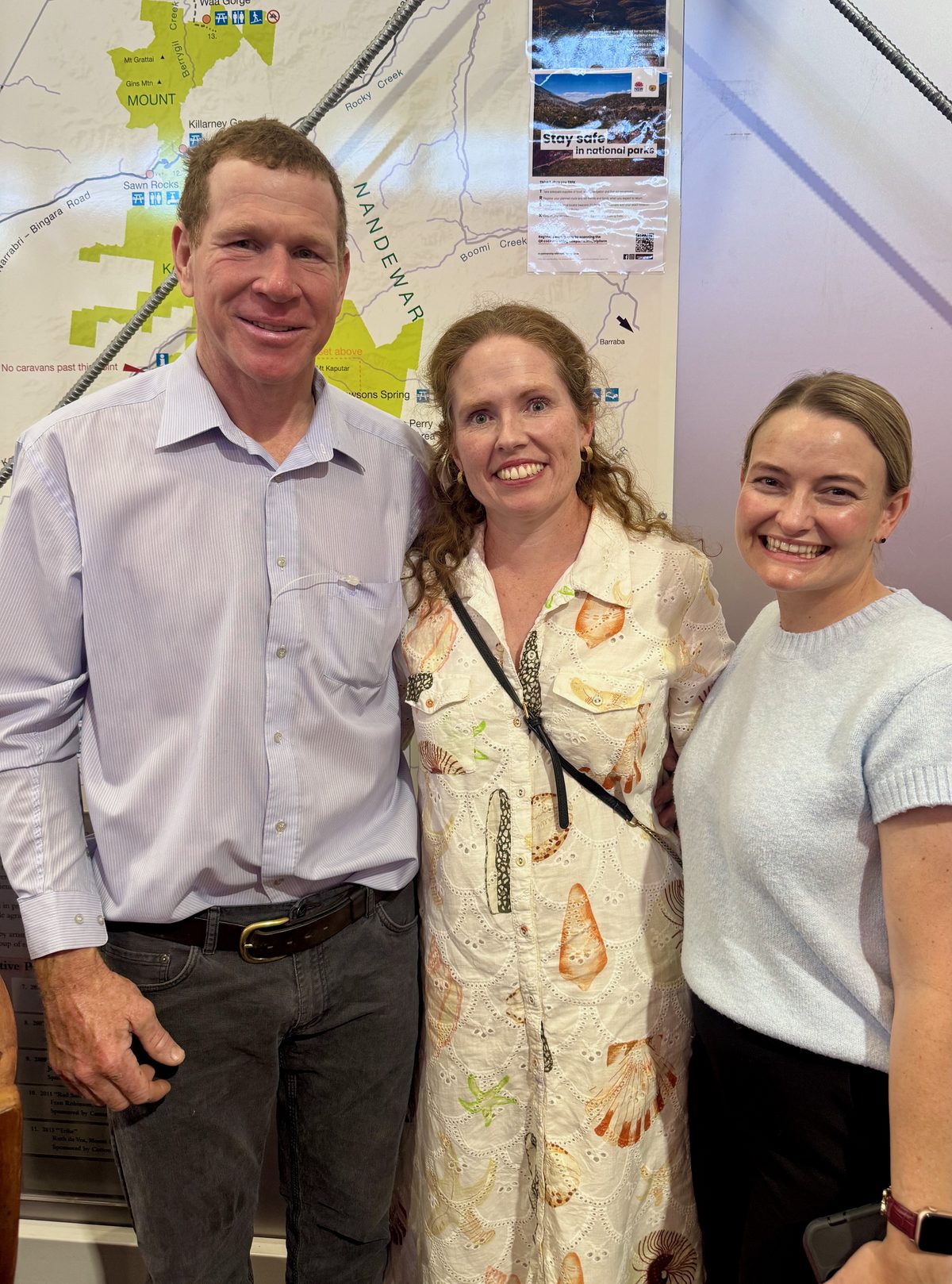
Tom Wilson and Alex Wilson with Eloise Chaplain.
tt name remains well respected.
“A special thanks goes to the Boswell Company, especially Jim W Boswell, who supported and provided funding for this book, as did Australian Food and Fibre through Joe Robinson for their generous contribution to producing the book and to Joe’s dad David Robinson, who was chairman of AFF for many years and also a ginning and marketing customer of Auscott.”
Mr Anthony’s keen interest in Auscott’s history, its contribution to the Australian cotton industry and country communities sparked the book project that began with collecting information about the company before his retirement in 2018.
“I wanted to make sure that Auscott’s 58 years in Australia up until it was sold in 2021 were not lost as time moved on,” Mr Anthony said.
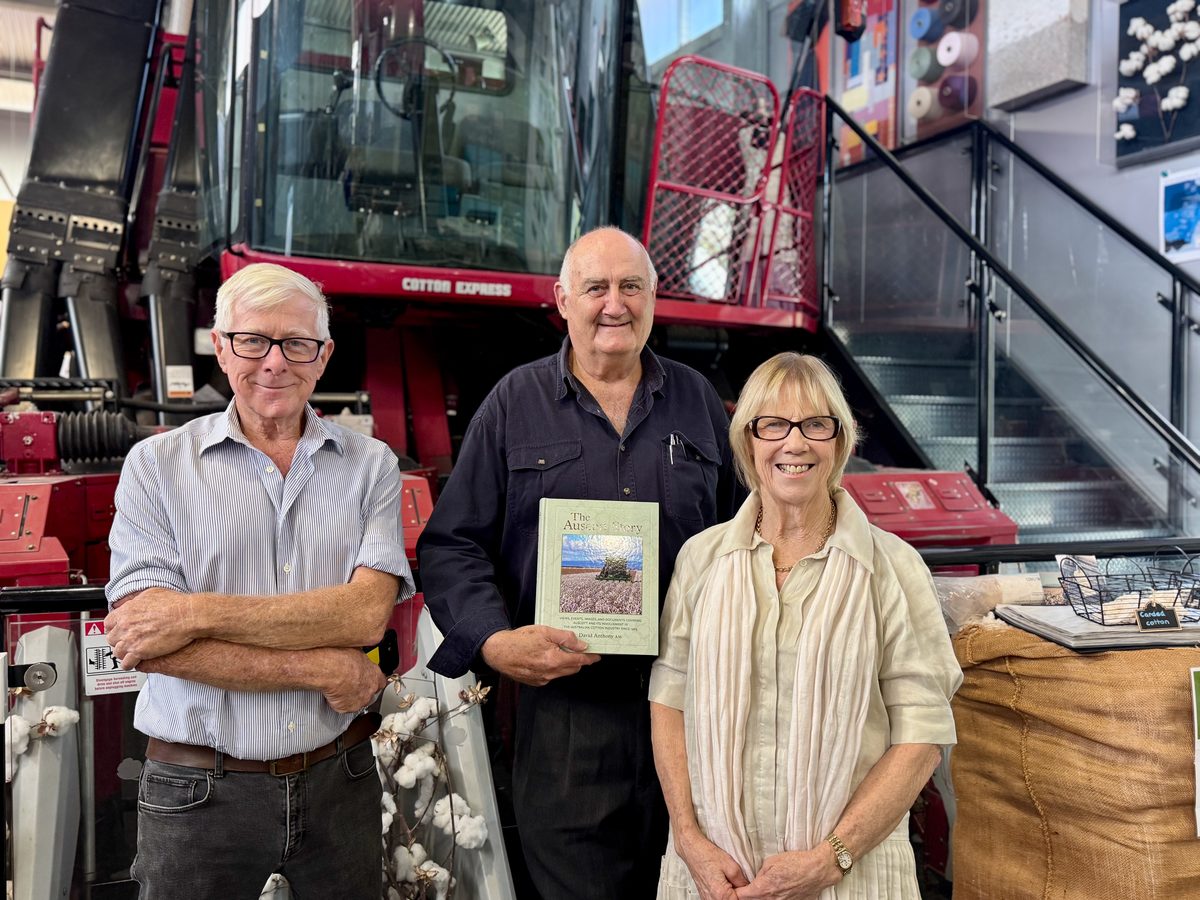
Ian and Wanda Dunnet OAM with Dave Anthony AM. Mr Anthony said Ian’s father, the late “Chappie” Dunnet, was one of the local businesspeople who backed Auscott’s establishment, recognising its potential to help Narrabri grow.
“In particular, I wanted to document the company’s activities and achievements and give it as a gift to those growers, industry people and employees who had supported and assisted Auscott.”
Countless hours of research and dedication over the years by Mr Anthony have culminated in a magnificent hardcover book, bringing together Auscott’s story through photographs, research, interviews and memories, creating a lasting record of an important chapter in
Australian agriculture and our region’s local history.
The launch in Narrabri was particularly fitting, given the shire’s significance in Auscott’s Australian story. The business began its operations between Narrabri and Wee Waa.
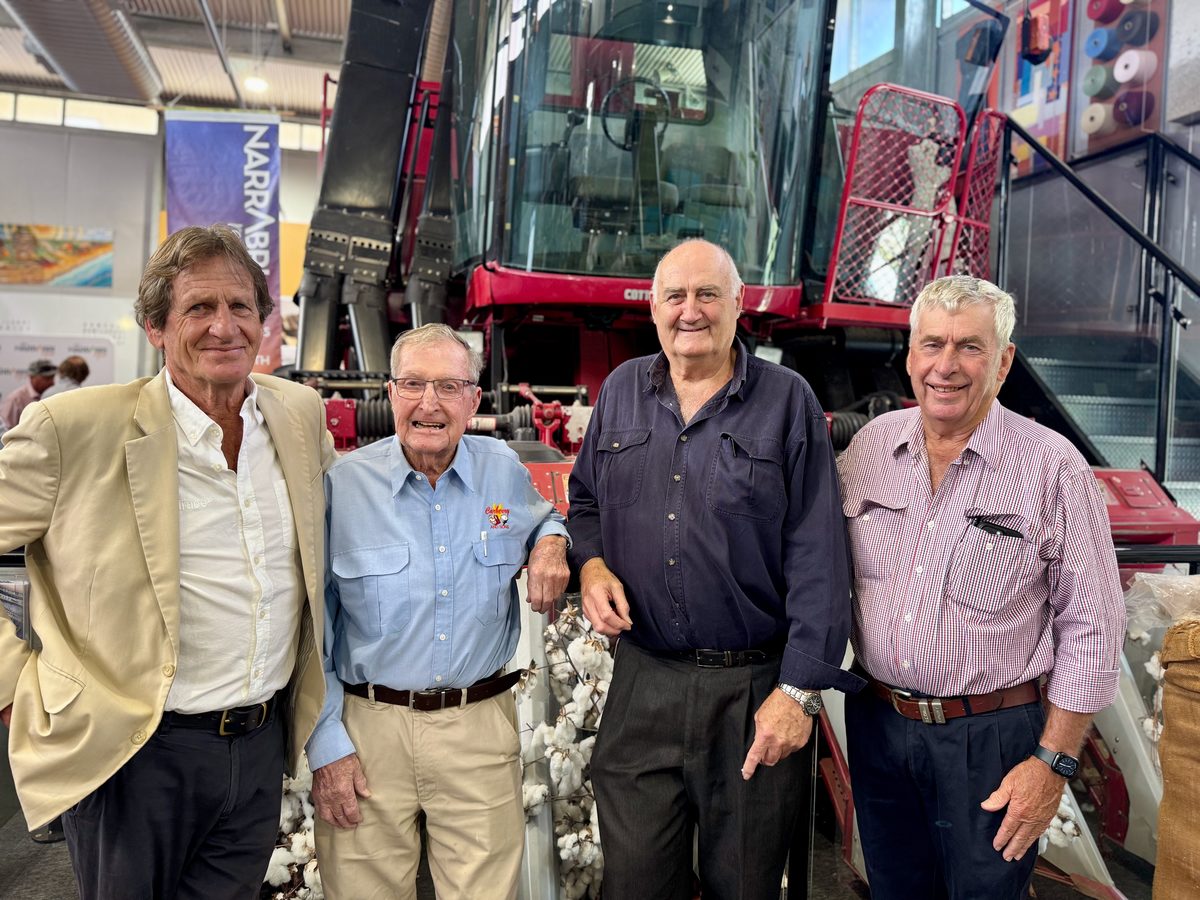
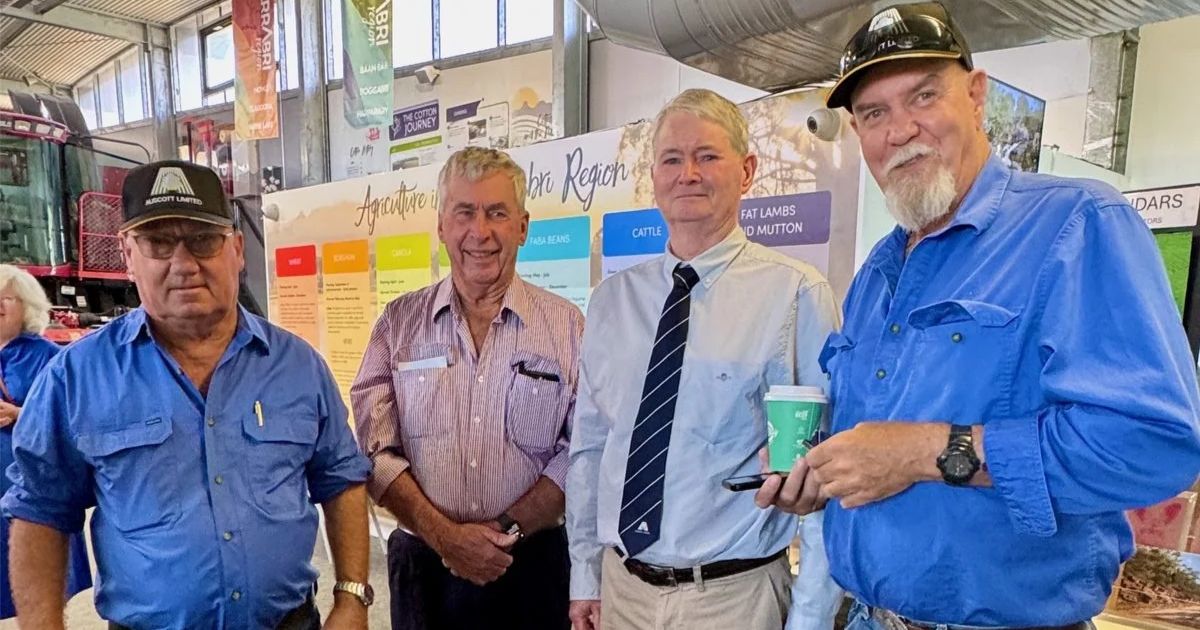
James Kahl, Pat Carberry, Dave Anthony AM and Phil Norrie. Speakers at the launch of The Auscott Story included local cotton growers Mr Carberry, Mr Norrie and Mr Kahl and CSIRO Cotton Breeding Research Group Leader Dr Warwick Stiller. Narrabri Shire mayor Darrell Tiemens officially launched the book, written by Mr Anthony, former managing director and chair of Auscott Limited. Photos: Ali Smith.
Auscott’s origins date back to 1963, when Arizonan cotton growers Jim Blasdell and Richard Rhodes set out to establish a large-scale irrigated cotton operation between Narrabri and Wee Waa.
As a private development of considerable scale, this was something totally new on the Australian scene, Mr Anthony explained.
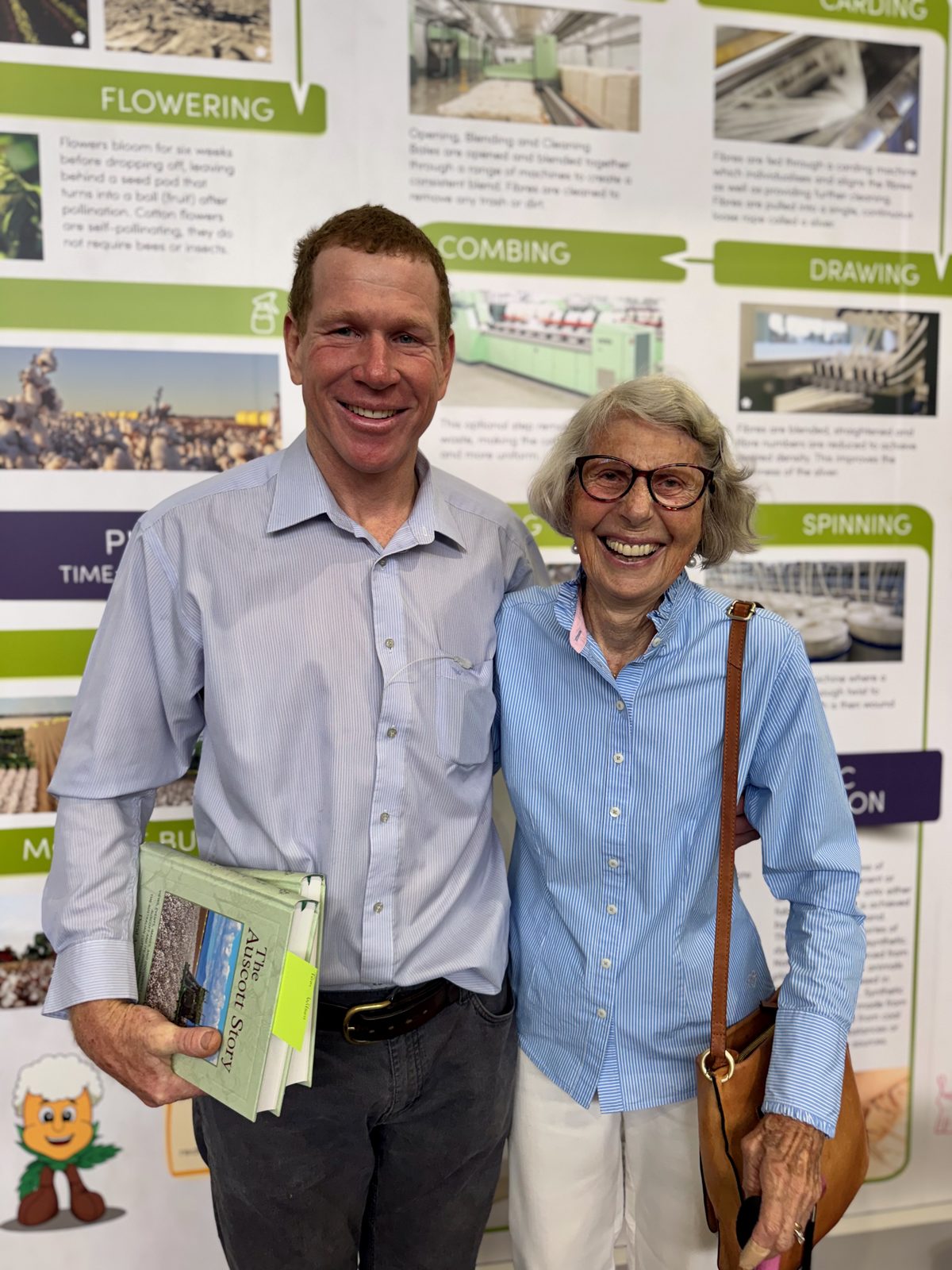
Tom Wilson with his mother Joyce. Tom’s father and Joyce’s husband, the late Bob Wilson, was Auscott’s first employee.
To facilitate their Australian venture, the J.G. Boswell Company of California held a mortgage over the Arizonans’ cotton ranches. The Boswell Company also had ranches in Arizona at the time.
The business, named Auscott (derived from Australian Cotton), was subsequently taken over by the Boswell Company, when the Arizonans hit extreme weed and insect issues along with very wet conditions and had exhausted their funds. Under the Boswell Company, Auscott went on to develop into one of Australia’s major cotton-growing enterprises.
From those early roots in the Namoi Valley, Auscott grew into one of Australia’s leading cotton growers, processors, marketers and shippers, expanding into the Macquarie, Gwydir and Murrumbidgee valleys and building 11 gins over its lifetime before being acquired by Australian Food & Fibre in 2021.
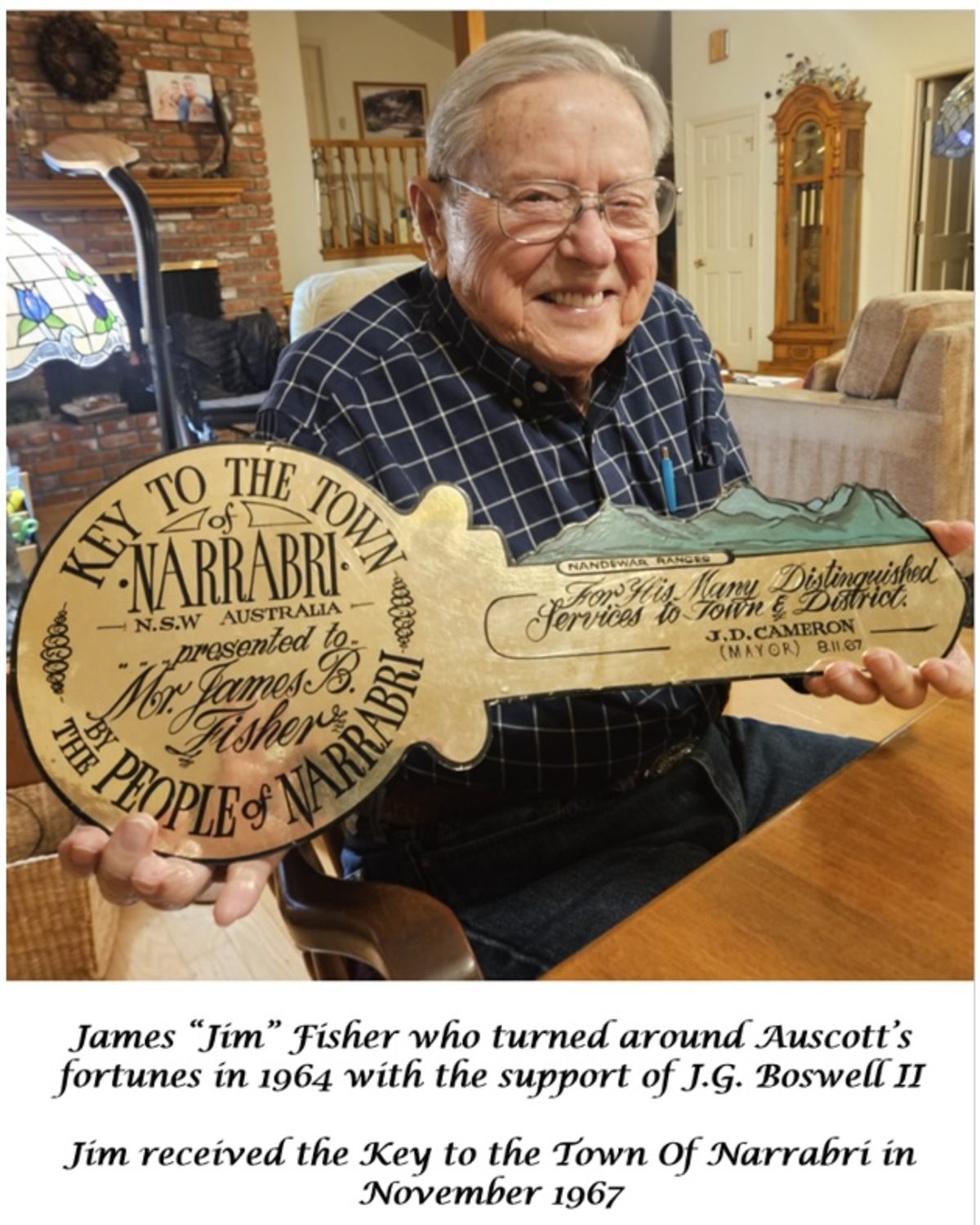
Dave Anthony supplied The Courier with this image, the caption reads: James “Jim” Fisher who turned around Auscott’s fortunes in 1964 with the support of J.G. Boswell II. Jim received the Key to the Town of Narrabri in November 1967.
In writing The Auscott Story, Mr Anthony said he researched industry and company records, newspaper articles and archives, various photographic libraries as well as Hansard records, where the proposed Auscott development was referred to as the Narrabri project.
He interviewed growers, industry and company personnel along with researchers including those at CSIRO and NSW Department of Primary Industries (now DPIRD).
“One thing about history is that on some issues different people see the same issue differently,” Mr Anthony noted, adding he navigated these views to present what he thought was the most balanced account.
“Fortunately, conflicting views were rare.”
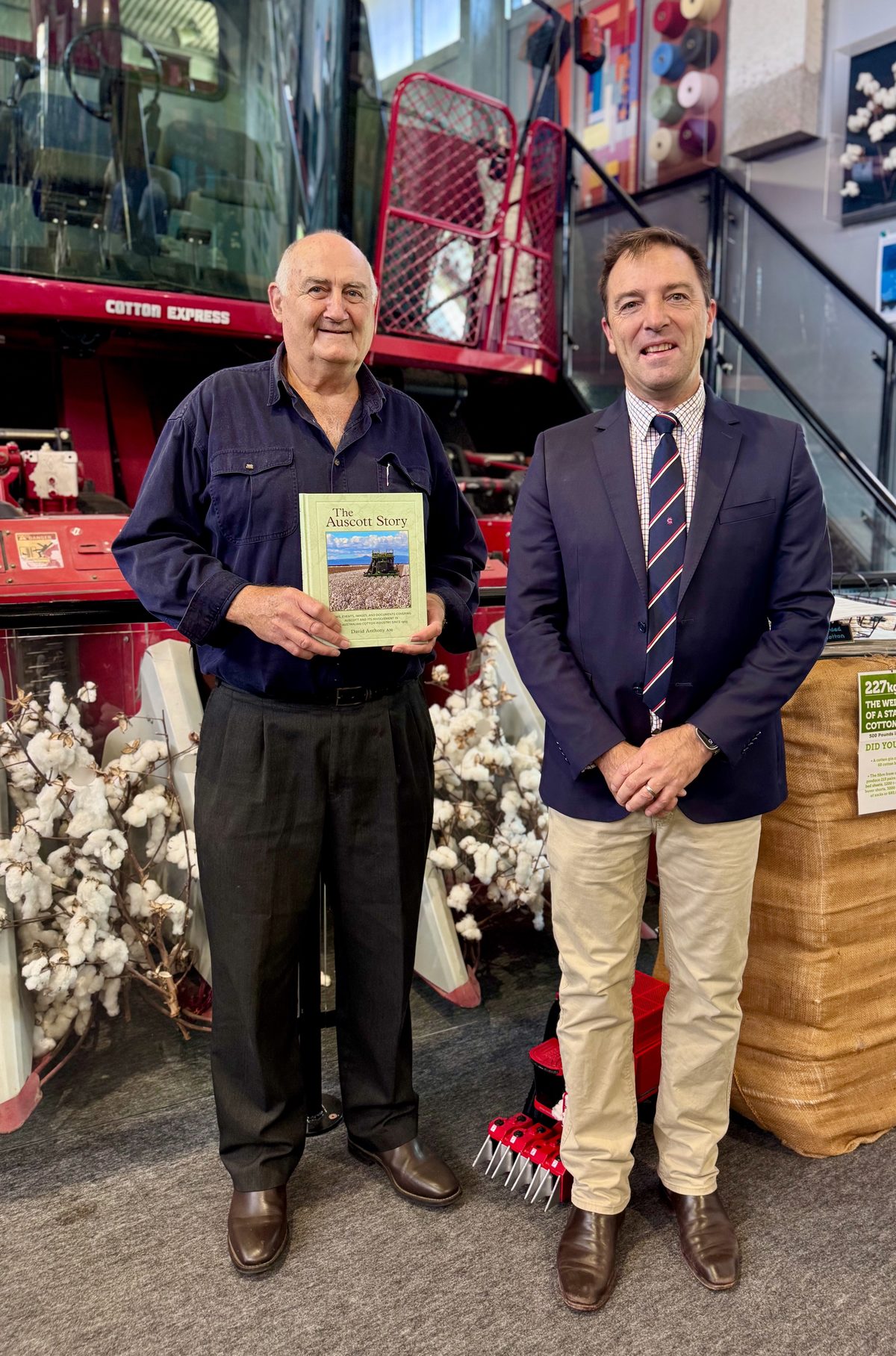
Author of The Auscott Story book Dave Anthony AM with Narrabri Shire mayor Darrell Tiemens.
Mr Anthony explained how Auscott’s establishment was not without challenges, as the founders faced political opposition and difficulties securing land and water licences as
well as a disastrous first growing season.
However, strong support from local businesspeople, who recognised the potential for the district, helped pave the way for the company’s future.
Reflecting on his research and the industry’s history, Mr Anthony said: “Cotton has been grown in Australia since the mid-1800s.
“It was a dryland industry right up until the late 1950s and centred on Queensland, much of it in the Ipswich, Carrara, Beaudesert, Dawson and Caboolture areas. All cotton was hand-picked.
“It was not until the 1950s that irrigated cotton was grown on any scale. Alan Brimblecombe in Queensland was the pioneer there.
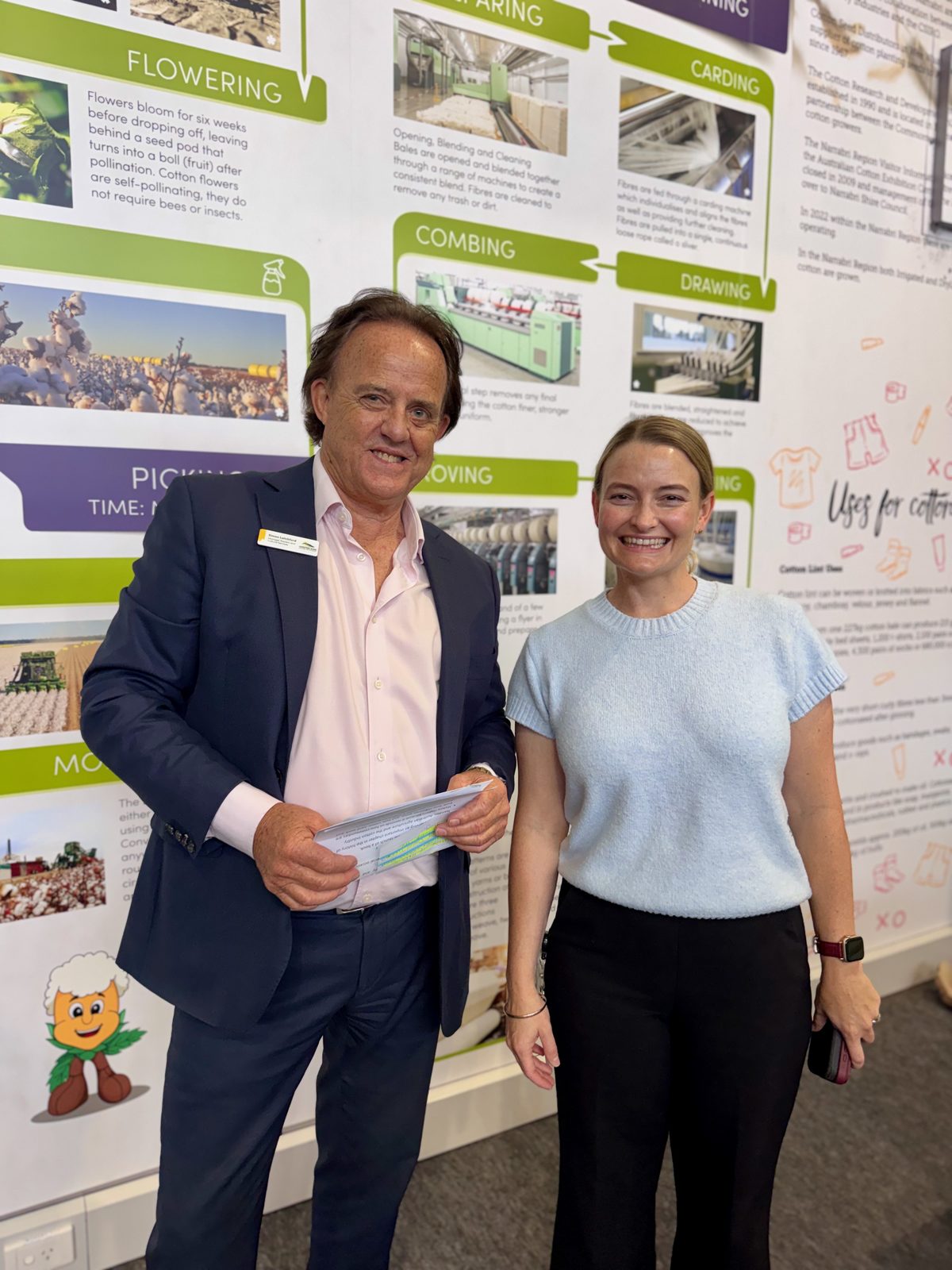
Narrabri Shire Council, with tourism and cultural development manager Simon Latchford and NSC general manager Eloise Chaplain.
“In NSW, the pioneers of the modern cotton industry were Paul Kahl and Frank Hadley. They were attracted to Australia by the NSW Trade Commissioner in California, who was promoting good land, good water and an ideal climate for cotton production.
“While there was political pressure to encourage Kahl and Hadley to go to the Riverina, Darlington Point in particular, researchers had a differing view favouring the warmer, longer season at Narrabri and its great soils as the place to grow cotton.
“In 1961, Kahl and Hadley grew their first crop and soon set up the Namoi Cooperative to gin and market their cotton as other growers took up this new crop.”
Most readers would be familiar with the pioneering partnership of the late Paul Kahl and the late Frank Hadley, who, together with their families, packed up their homes in California’s San Joaquin Valley and headed for Wee Waa in the Namoi Valley to grow cotton in the 1960s.
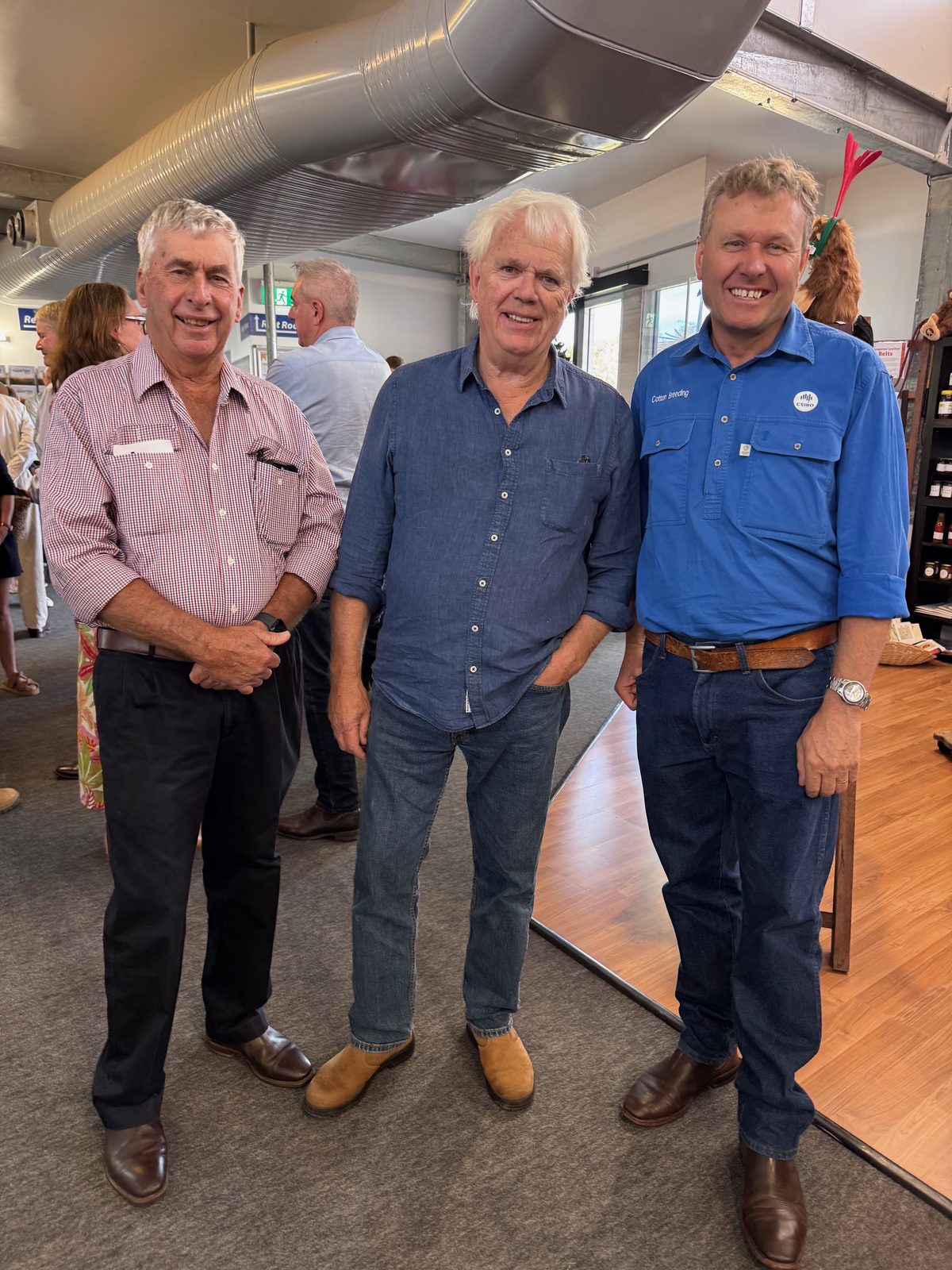
Phil Norrie, Rob Dugdale and Dr Warwick Stiller.
The story of the Californians’ dream becoming a reality is legendary amongst locals. In 1961, the farming partners sowed the first seeds at ‘Glencoe’, Wee Waa, and in 1962, harvested a successful cotton crop, helping
launch the modern Australian cotton industry.
The Kahl family has continued to farm at ‘Glencoe’, and Paul’s son James Kahl was one of the guest speakers at The Auscott Story book launch.
Mr Anthony explained that the original Auscott venture was established by two Arizonan cotton growers, Jim Blasdell and Richard Rhodes.
“As Kahl and Hadley were attracted to Australia by the NSW government promotions, so too were Arizonan farmers Jim Blasdell and Richard Rhodes,” he said.
“They spent some time in Australia in 1961 and 1962 looking around and, like the Kahls and Hadleys, decided that Narrabri would be an ideal spot for them to set up a large private irrigated cotton operation.
“While Kahl and Hadley were family farmers, Blasdell and Rhodes had a close association with the J. G. Boswell Company of California.
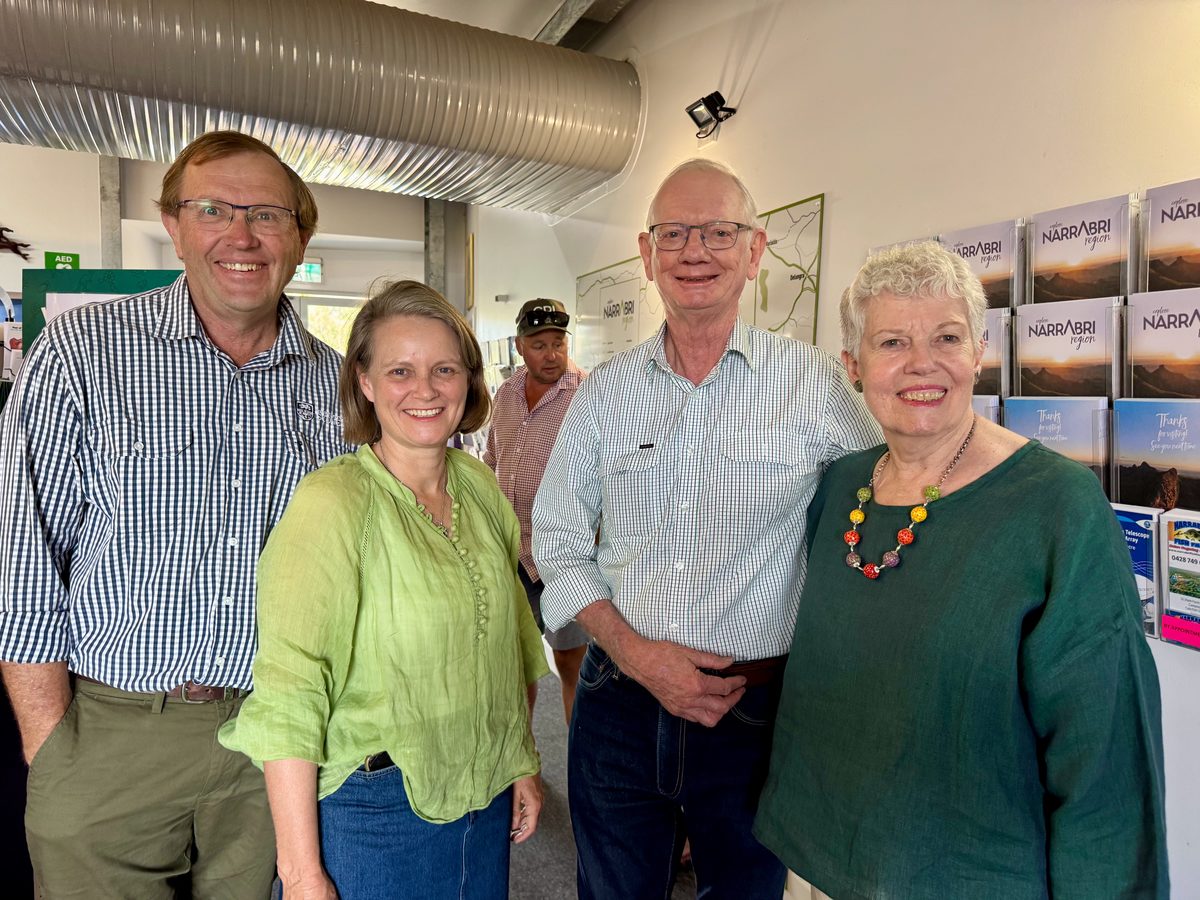
Ingrid and Guy Roth with Bruce and Joan Pyke.
“They were looking to have a cotton operation of significant scale just like the Boswell Company, which had large-scale cotton ranches in California, Arizona and Mexico.
“It was this vision of a large-scale corporate enterprise which created all sorts of hurdles with government agencies and the NSW opposition, particularly the Country Party.
“Blasdell and Rhodes had identified three soldier settler blocks between Narrabri and Wee Waa as the site for their 4,000ha (10,000 acres) development.
“The Country Party held the soldier settler block system as sacrosanct.
“It was a long battle, but finally the Arizonans secured the land.
Bernie George, Allan Williams, Anne Williams and Lynda George.
“Many soldier settler blocks were too small for returning soldiers to make a decent living and the three farmers that had been selected were keen to sell at the prices being offered by the Arizonans,” Mr Anthony explained.
He said the lengthy battle to secure the land was followed by the challenge of obtaining enough water licences for 4000 ha.
Paul and Laura Lehmann.
“In those days water licenses were in units of 162ha (400 acres) but with no volumetric limit,” Mr Anthony said.
“Again, this took a huge amount of time and effort to secure enough water licenses.
“Finally, that was solved to a reasonable extent, and today, of course, farming operations can and do hold multiple licenses and water licences have volumetric limits.
Pat Norrie, Karen Kirkby and Prue Anthony.
“One caveat, however, on what was known then as the Narrabri Project was that Blasdell and Rhodes had five years to make a profit and then sell up to Australian farmers. This also applied when the Boswell Company took
over.
“It was now well into 1963, and time was of the essence to develop a large-scale cotton irrigation enterprise from open treeless sheep grazing country and plant cotton in September/October.
“Blasdell and Rhodes funding for their Australian operation came from a mortgage over their Arizona ranches held by the J. G. Boswell Company.”
The 1963-64 growing season brought further difficulties.
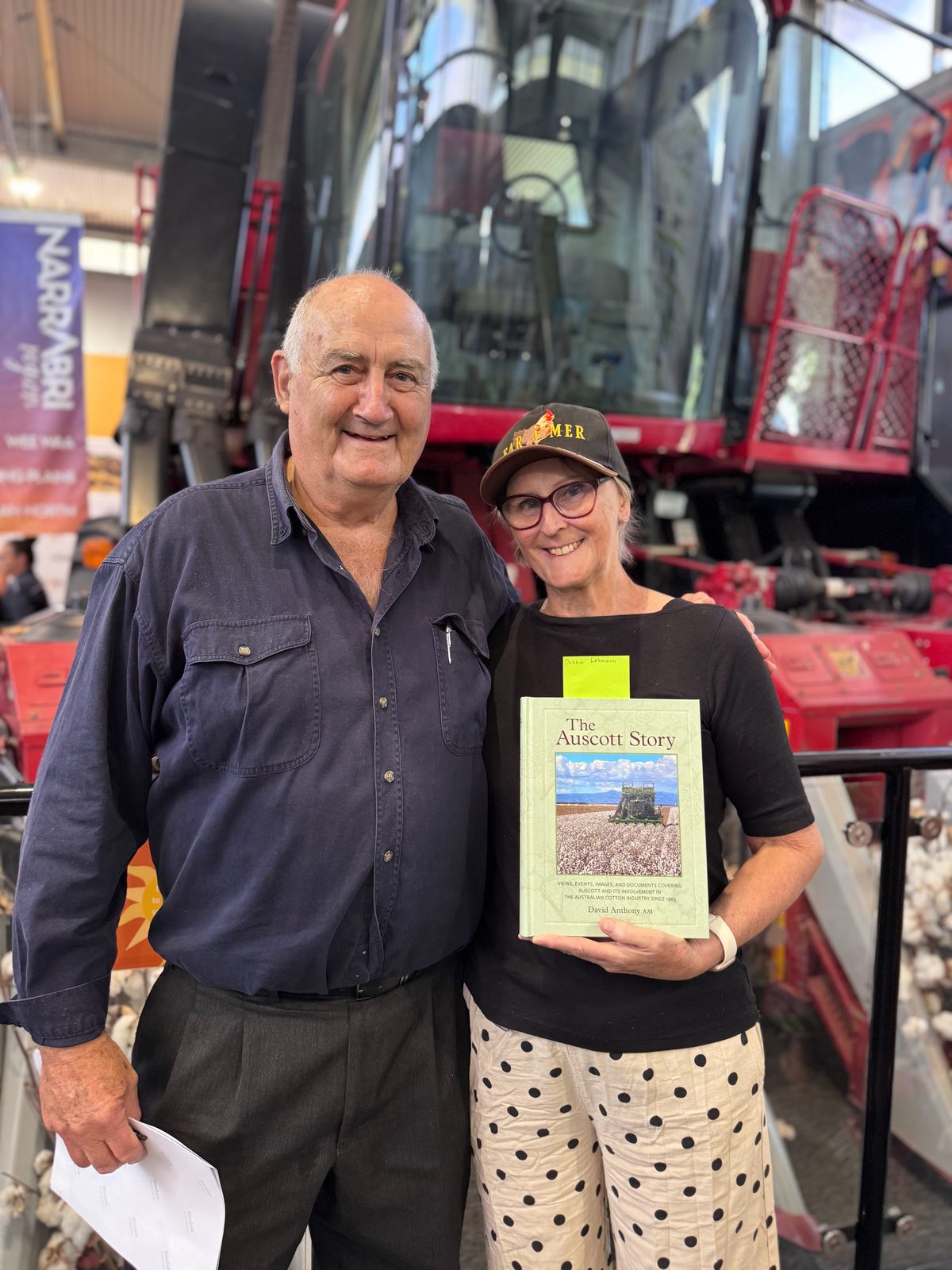
Dave Anthony with Deb Lehmann. Mr Anthony mentioned Deb’s father, the late Vic Melbourne, saying, “Auscott also built their first gin ready for the 1964 harvest. As it turned out Vic Melbourne was Auscott’s first grower customer and his production exceeded that of Auscott.”
“The weather gods were not kind to Blasdell and Rhodes,” Mr Anthony explained.
The season was particularly wet, with flooding across the valley. Planting was late and spread out, while weeds emerged across the old sheep country and grew faster than the cotton. Insects also proved a major challenge.
“It turned into a disaster. Despite hundreds of cotton chippers being deployed, the weeds won,” Mr Anthony said.
With their funds exhausted, Blasdell and Rhodes called on the J.G. Boswell Company for assistance. Rather than simply provide more funding, J.G. Boswell II travelled to Narrabri to assess the operation.
He quickly realised much of the crop could not be saved, and Blasdell asked him to take over the business, which was then known as Auscott (short for Australian Cotton).
Boswell sent young Californian agronomist Jim Fisher to Narrabri to assess whether the operation could succeed.
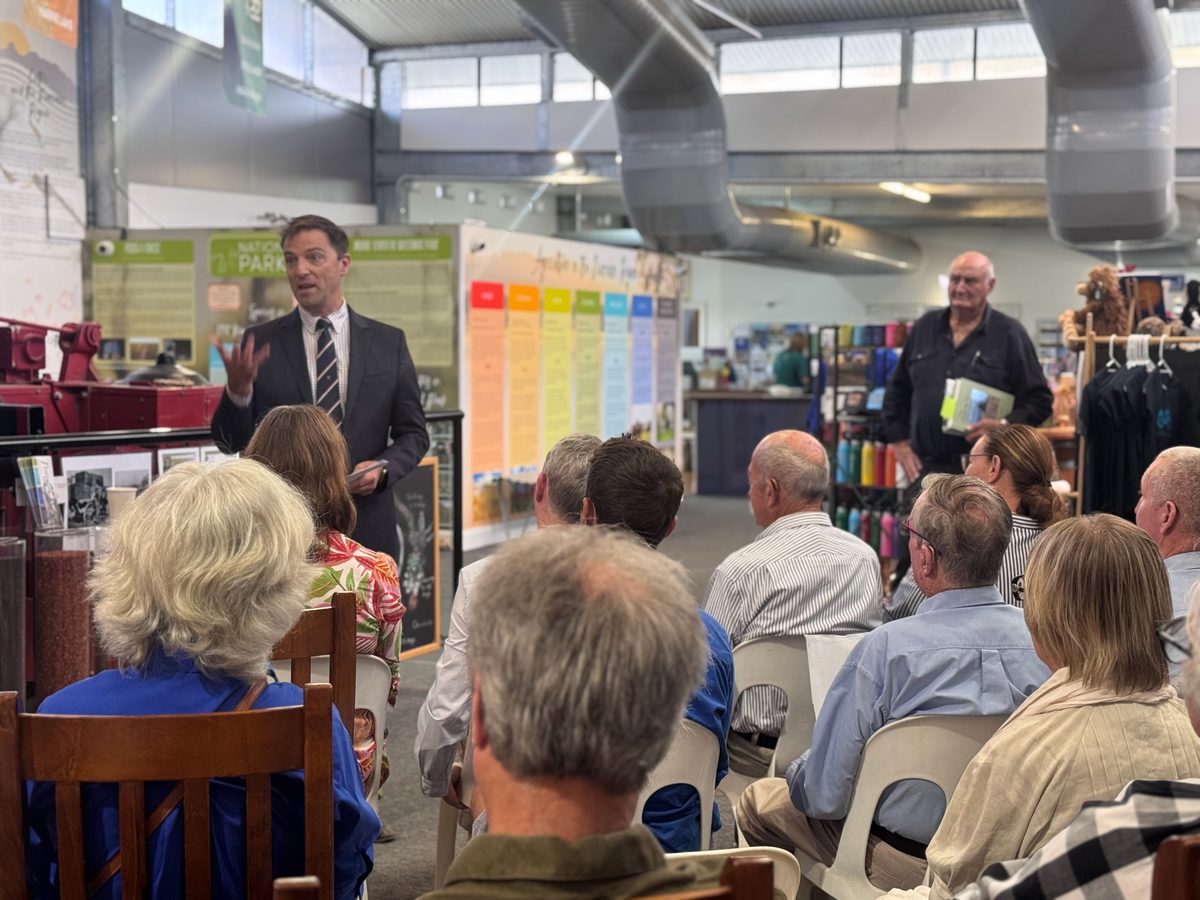
Narrabri Shire mayor Darrell Tiemens launched The Auscott Story at the visitor information centre last week.
“After considering the soil, the climate and the cotton that had not been taken over by weeds, Fisher said yes, this was good farming land and a good environment for cotton,” Mr Anthony wrote.
The Boswell Company subsequently took over the operation, with Mr Fisher becoming farm manager at Narrabri and later managing director for a period.
Mr Anthony said Mr Fisher proved to be a great farmer and industry figure, as well as a valuable member of the Narrabri community, where he was awarded the keys to the city.
Despite the difficult start, the second season under Mr Fisher’s guidance was very successful.
Auscott went on to expand across the Namoi Valley and later into Warren, Trangie, the Gwydir Valley and Hay.
Mr Anthony also acknowledged the strong support of Narrabri businesspeople in the company’s early years, including Jack Logan, “Chappie” Dunnet, Pat Smythe and Alan King.
While governments and opposition debated the soldier-settler system and water licences, the local business group argued that developments such as the Narrabri Project were needed to foster growth and diversification in the shire.
“Their voices won through to the benefit of Narrabri,” said Mr Anthony.
Over its 58 years, Auscott employed thousands of people, invested in regional towns and established a highly regarded undergraduate scholarship program.
More than 150 students from the towns where Auscott operated participated in the program, which fully funded university studies for around 16 students at any one time.
Auscott was also a strong supporter of research and development and played an active role in supporting the wider cotton industry through organisations and initiatives including Cottonseed Distributors, Northwest Vegetable Oils, the Australian Cotton Growers Research Association and the Australian Cotton Foundation, now Cotton Australia.
A philosophy associated with the company, “What’s good for the industry is good for Auscott”, was also recalled at the book launch.
It reflected Auscott’s commitment to supporting the wider cotton industry, including through collaboration with other industry organisations, investment in research and development and the promotion of best practice.
Mr Anthony also highlighted the industry’s professional farmers, investment in research, competitive processing and marketing infrastructure and ability to work together despite commercial competition as important factors in its development.
The introduction of the independently audited Best Management Practice program was another significant step, supporting the industry’s social licence and access to markets where environmental stewardship, health and safety and labour standards are important.
“R&D has been the backbone of the industry and is why Australia has the highest yields and quality of upland cotton in the world and now the third largest exporter,” said Mr Anthony.
The Auscott Story is not available for sale, but copies will be held in various libraries.
To order photos from this page click here