The outlook for “above average rainfall” across eastern Australia will be unwelcome news to many in the Gunnedah district after last weekend’s flood event – the second to impact the region this month.
The moderate flood, where the Namoi River at Gunnedah peaked at 7.58 metres early Saturday morning, followed a separate major flood event earlier this month. On August 5, the Namoi River in Gunnedah peaked near 8.5m – well above the major flood height of 7.9m.
As flood levels rose late last week, authorities initially forecasted the river could exceed the major height again at Gunnedah. That advice was later downgraded to a moderate flood threat due to less rainfall across the catchment than was originally forecast.

Roads and properties in the district, however, were swamped again as floodwater returned to low-lying local areas – helped by already saturated river banks from recent floods and rainfall.
At about 11.15am on Friday, floodwater was well over the river bank and steadily rising across Donnelly Playing Fields.
The corner of Warrabungle and Bloomfield streets already had water across one lane of traffic by this time.
Upstream, the Mooki River was running fast at Breeza as floodwater flushed towards Gunnedah.
By 12pm Friday, the Namoi River at Gunnedah was 7.01 metres, below the minor flood level of 7.3m but still rising.
The Bureau of Meteorology said the Namoi River at Gunnedah could peak near 7.70m during Saturday, with moderate flooding. This followed several updates which anticipated the river could peak as early as Friday afternoon.
A spokesperson for the Federal Minister for Emergency Management Kristy McBain said on Tuesday that assessments from recent Gunnnedah flooding, are ongoing.
“The Australian Government’s National Emergency Management Agency is working closely with the NSW Government regarding impacts from recent flooding in the North West of NSW, including in the Gunnedah Local Government Area,” the spokesperson said.
“State and territory governments have primary responsibility for responding to disasters and providing immediate assistance to impacted communities. The Australian Government supports the states with the costs of providing relief and recovery assistance to communities through the jointly funded Disaster Recovery Funding Arrangements (DRFA).
“Under the DRFA, the states identify the assistance required to support impacted communities, and the Australian Government co-funds it. This recognises that the states are best placed to identify the recovery needs of communities, in accordance with their responsibility for disaster management.”
According to the Bureau of Meteorology’s long-range forecast released on August 21, the outlook for September to November indicates above average rainfall is likely across much of eastern Australia.
Rainfall is likely to be above average (60% to over 80% chance) for most of the eastern half of Australia, with October showing the highest likelihood. Additionally, much of eastern and parts of central Australia face an increased chance of unusually high rainfall
Daytime temperatures are likely to be above average in northern, western, and south-eastern regions, with an increased chance of unusually warm days in the far north and south-east.
Overnight temperatures are very likely to be above average across most of Australia, with an increased likelihood of unusually warm nights in northern, eastern, and central areas.
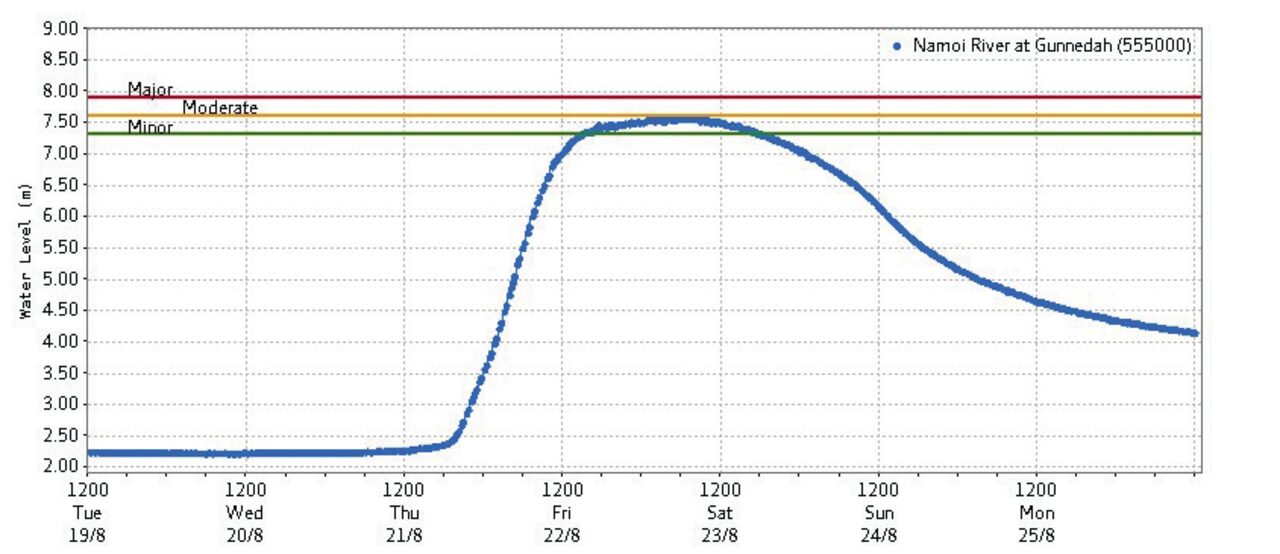
The BOM’s graph showing the flood height of the Namoi River in Gunnedah over a six-day period from Tuesday, August 19 to Monday, August 25.
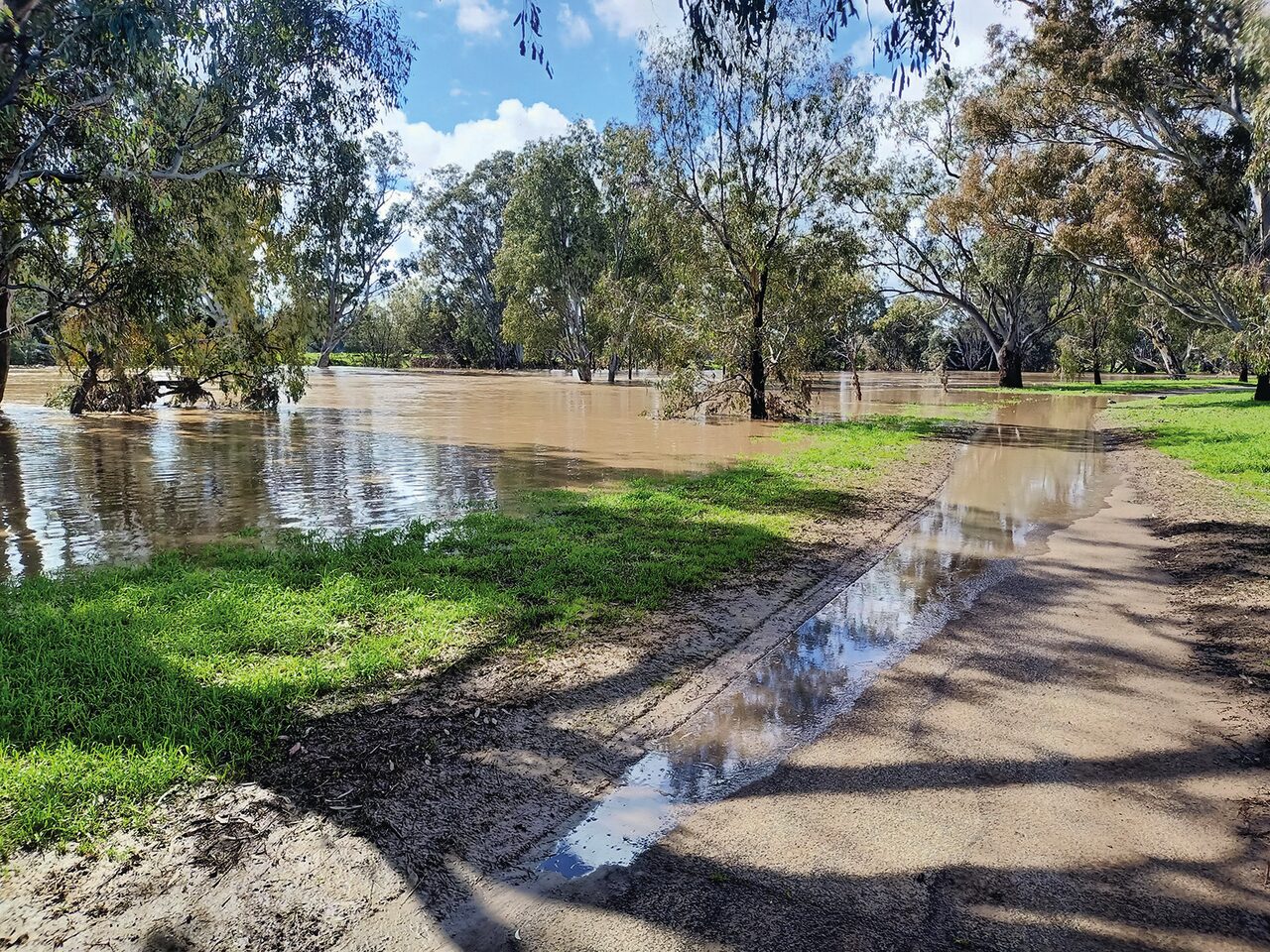
The river pathway at Donnelly Playing Fields in Gunnedah on Friday morning. The river was below the minor flood height at this time.
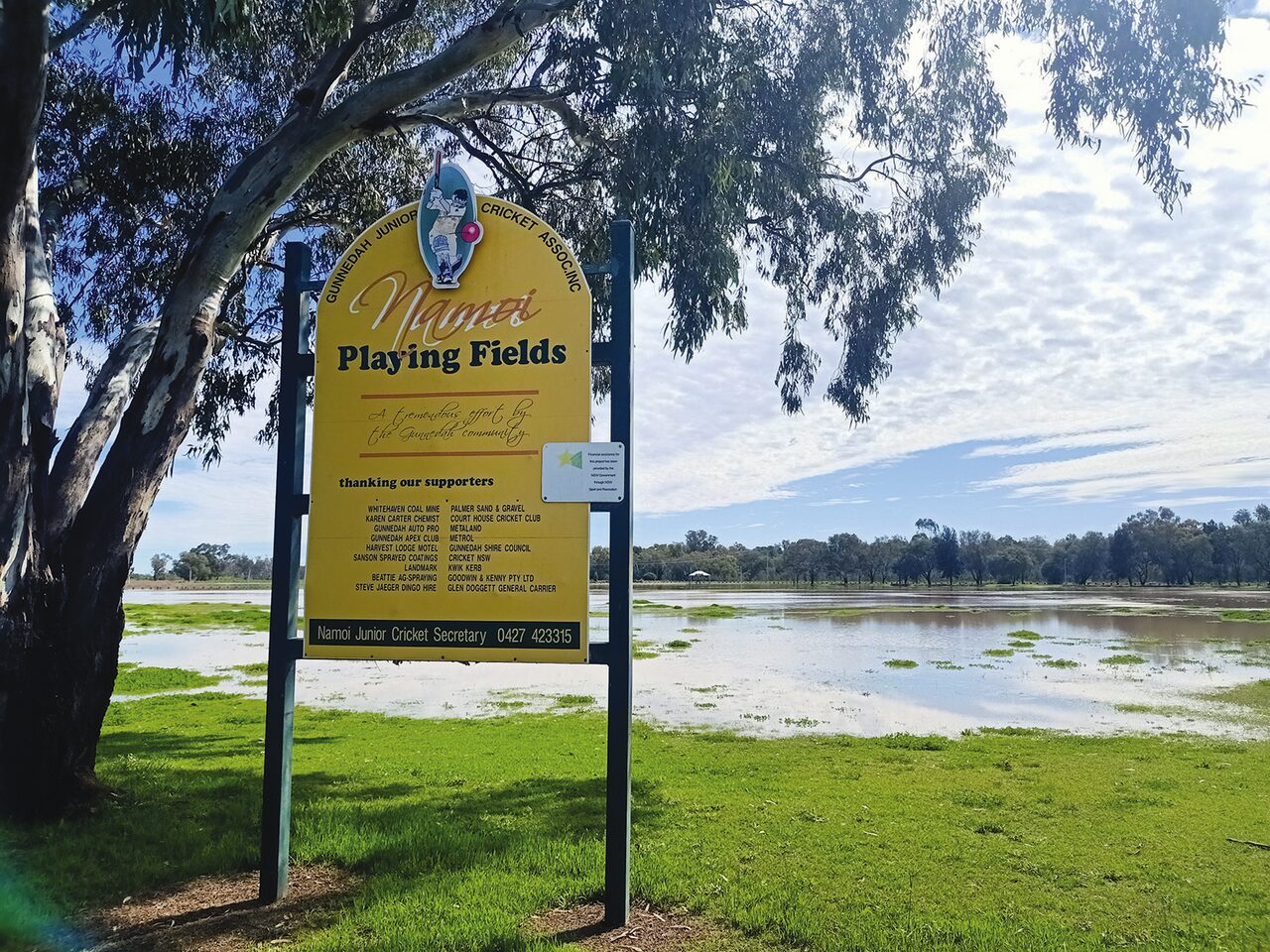
Namoi Playing Fields on Bloomfield Street on Saturday near the flood peak.

The view from above Gunnedah at the weekend as significant flooding impacted the local community for the second time this month.