A former Gunnedah mayor, Horatio Hogarth, whose unusual name has faded into the mists of time was a solicitor who came to Gunnedah in 1882 and practised in the town for 25 years.
He served as an alderman on Gunnedah Municipal Council from 1894 to 1899 and again from 1902 to 1907 when he served as mayor for his second term on council. He was also involved in several local organisations but there appears to be little recognition of his contribution to the community.
Travelling along the highway through Breeza, there is a street sign named Hogarth Street which leads to the village hall. It can only be presumed that it was named for Mayor Hogarth.
During his time in Gunnedah, Horatio Hogarth, served as secretary of the fledgling Gunnedah Jockey Club along with other professional men in the town, including TK Abbott, JH King, F. Hinds, M. Berry and H. Ayling,
There is very little available information on the early days of racing in the Gunnedah district, although it appears that, by the 1860s, the sport of kings was becoming popular in the area. The first course was on an area referred to as the Black Hill on the Curlewis Road but in the 1870s an area of 96 acres was granted by the government for the establishment of a racecourse on an area of thick hopwood scrub which later became the showground.
Horatio Hogarth was also one of the early members of the Masonic Lodge which was formed in August 1894
The upstairs room of the original brewery, by then a cordial factory, was used as the first Lodge headquarters and meetings continued there until January 1915 when the new Masonic Temple at the corner of Bloomfield and Abbott Streets was completed. On May 5, 1915, the Lodge room was consecrated and dedicated to Masonry.
One of the first actions of Lodge Zion was to organise the first Masonic Ball, which took place in 1895.
Membership of Lodge Zion grew rapidly, with old minutes recording that on January 5, 1895, Horatio Hogarth, aged 30, solicitor; was one of six businessmen presented for induction. Others included John William Henry Jarmain, 40, coachbuilder; William Samuel Cock, 22, cordial manufacturer; John Kirkpatrick, 54, clothier; Arthur James Baker, 29, butcher and William Macadam, 35, storekeeper.
The son of Henry Clement Hogarth and Eliza Clara (nee Witts), Horatio Hogarth married Amelia Harriette Nowland (1872-1924) in 1892 in Gunnedah.
A report in the Sydney Morning Herald of Monday, November 28, 1892, described the wedding conducted at the residence of the bride’s parents, by the Very Rev. Dean O’Sullivan, parish priest of St Joseph’s Catholic Church: ‘Horatio Hogarth, of Gunnedah, solicitor, third son of the late Henry Clement Hogarth, of Bombala, to Amelia Harriette (Millie), fourth daughter of Robert John Nowland, of Gunnedah.’
Horatio Hogarth had the family home known as Loloma constructed on a corner allotment behind the Catholic Church. It was later purchased by the church for use as a presbytery and the clergy lived there from 1926 until the new presbytery was constructed facing Conadilly Street in 1937.
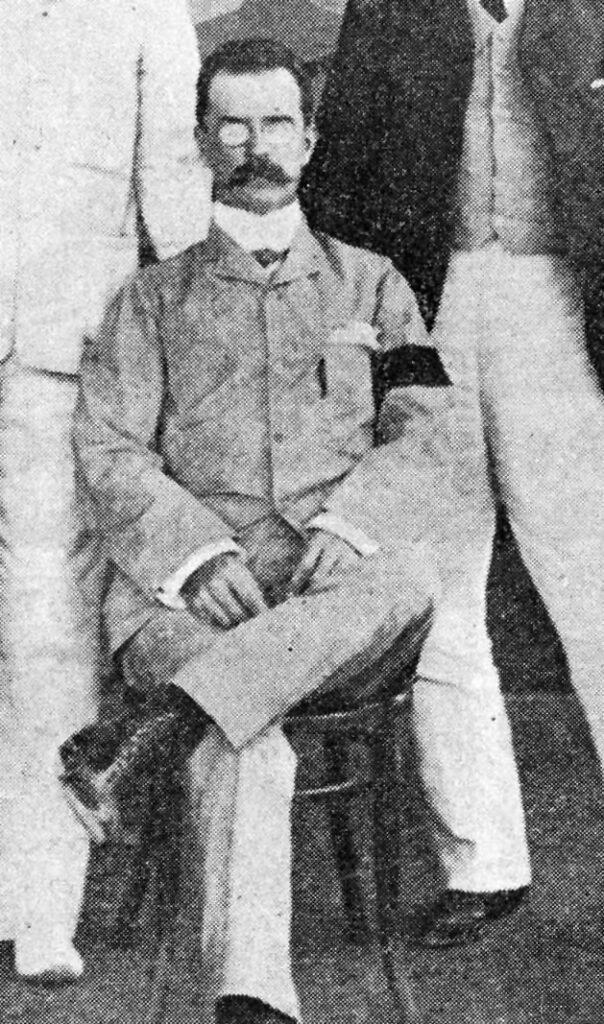
Horatio Hogarth.
Loloma had been purchased by the parish for £1925 cash.
On Sunday, October 31, 1926, Loloma was blessed by the Bishop, Rev. Dr O’Connor, and the clergy moved in.
Horatio and Amelia Hogarth raised three daughters and two sons, Darrell and Claude, who both served in the Great War but were wounded in France and invalided home.
The late Ron Mclean’s book In The Line of Fire, described their service.
The eldest brother Darrell Hogarth was born in Gunnedah and enlisted in the AIF as a 19-year-old. He was assigned to the 1st Battalion but had a chequered time in uniform – he was twice wounded and took part in several major battles on the Western Front but he was also in near-constant trouble with authorities.
He was first wounded, in the left thigh, in late July 1916 and was away from his unit for more than six months, as he underwent treatment in England. Before he returned to the front, however, he had to forfeit 43 days’ pay for “disappearing”. There was a litany of similar offences and following a court martial in early 1918 he was docked 106 days’ pay and reduced to the ranks for overstaying his leave for 13 days, until found by the military police. He was also called up and disciplined on several occasions for leaving his post and for disobeying orders.
Private Hogarth’s troubled service came to an end when he received a gunshot wound to the head in September 1918. He was seriously ill for weeks in hospital in England and in the following May he came home on the troopship Delta.
Younger brother Claude Horatio, born in Gunnedah on May 23, 1899, was 18 when he enlisted at the end of 1917. He arrived in France in August 1918, attached to the 13th Battalion reinforcements, but was only there a month when he received a gunshot wound to the left thigh, the same day that his brother was wounded.
The younger Hogarth was taken to Norwich War Hospital in England, where he was listed in a dangerous condition. He left England on the Ulysses in January 1919 for return to Australia. Horatio Hogarth was only 66 when he died on April 8, 1931.
In an obituary published in The Catholic Press, on Thursday 16 April 16, 1931, Horatio Hogarth, was described as ‘a well-known Sydney solicitor’. He died at his home, Dora Court, Marcel Avenue, Clovelly.
The obituary continued:
‘He was born at Bombala 66 years ago. Mr Hogarth was admitted to practice as a solicitor in March 1891. During the first 25 years of his career, he practised at Gunnedah, where he took a leading part in civic and sporting circles. He was Mayor of Gunnedah for many years. About 15 years ago he came to Sydney, where he filled the position of manager to the late Mr J.W. Abigail; later he entered into partnership with Mr E.D. Meagher. In 1921 he commenced practice in his own name.
‘He is survived by his widow, three daughters and four sons. The remains were removed from the home to St Anthony’s Church, Clovelly, where Requiem Mass was celebrated for the repose of his soul. The funeral afterwards left the church for Randwick Cemetery, where the Very Rev. Monsignor Peoples, P.P., recited the last prayers at the graveside. The funeral arrangements were carried out by Mr W.N. Bull’.
And so, the life story of Horatio Hogarth came to an end but his contribution to the Gunnedah community should never be forgotten.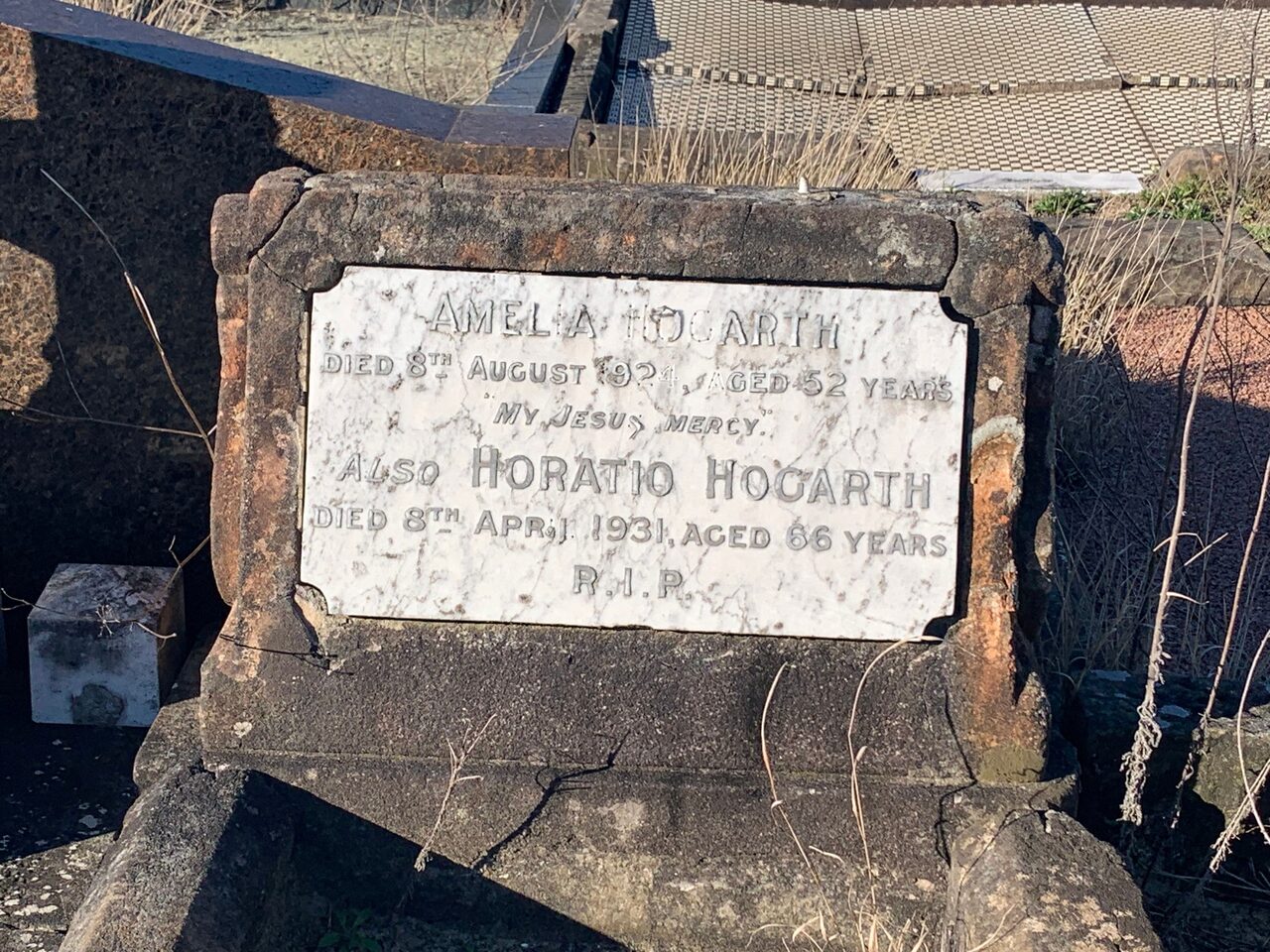
The grave of the Horatio Hogarth.
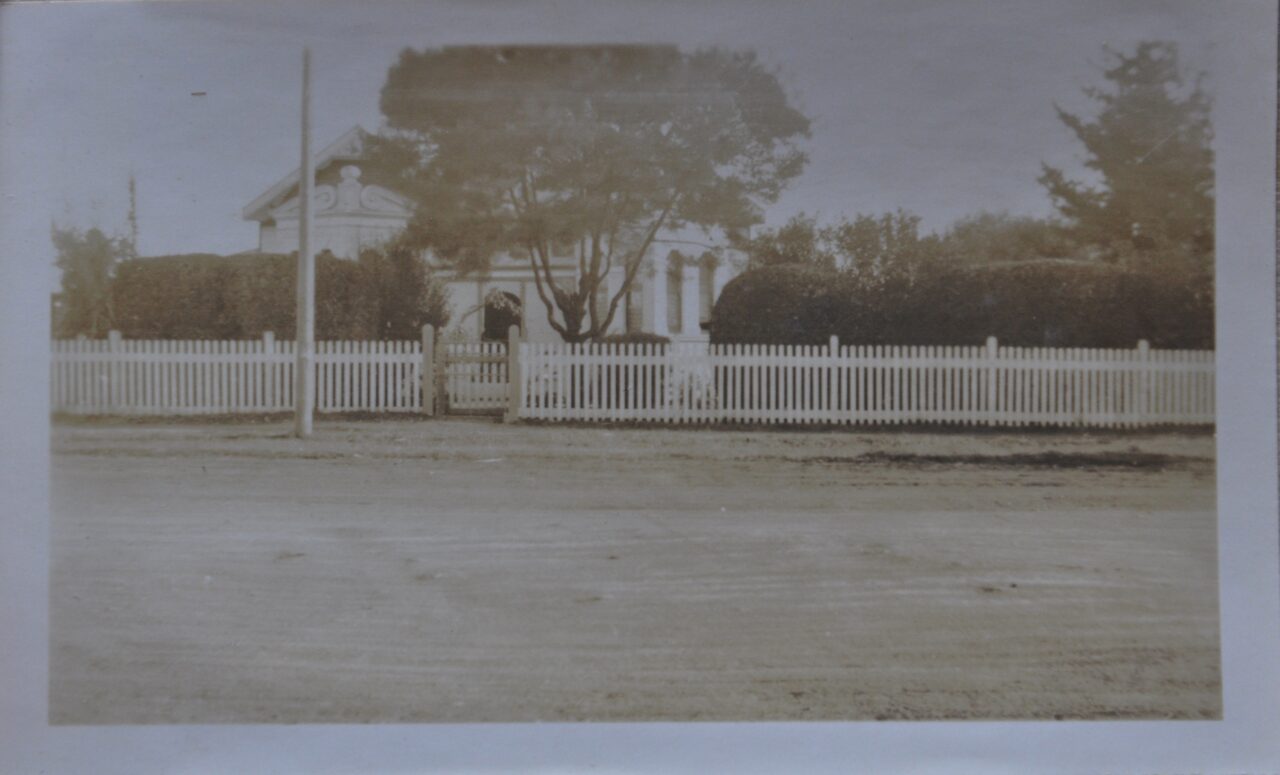
Known as Loloma, this house constructed by Horatio Hogarth was purchased by St Joseph’s Parish for the priests to use as a presbytery from 1926-1937.