


HISTORY: Born at the end of the Great War, Miss Dallas Gollan fought bureaucracy to follow her dream of becoming a school teacher and was eventually accepted at Armidale Teachers College as World War II drew to a close.
Rejected because she was ‘thin, shy and wore glasses’ her application papers had “permanent reject” written across the front.
The intervention of the Anglican Church local vicar, Canon Best was heaven sent, with the young woman beginning her studies in September 1945.
In the intervening years, Miss Gollan took on subsidised teaching at isolated one-teacher schools in the area bounded by Boggabri, Barraba, Manilla and Kelvin.
This involved living with families in their homes, and teaching children from surrounding properties at a small centrally located school house. So began the long trail of the country school teacher’s life, interspersed with varied and unreliable forms of transport to and from isolated schools.
On September 10, 1947, Dallas Gollan began her first day of teaching at Nea Siding Public School between Curlewis and Breeza and used a push bike for daily travel to and from her place of board. The distances varied between eight and 15 miles and if it was raining, she had to steer with one hand while holding her umbrella in the other.
On Sunday mornings she would travel with the Anglican vicar Archdeacon Stockdale to Curlewis and pedal back to Nea after church.
The following year, Miss Gollan was transferred to Boggabri Central School where she taught a composite class of first and second-class pupils, while boarding at a local hotel.
The weekend ritual of returning home involved travelling in a lorry or some other form of transport and returning to Boggabri on a goods train or the North West mail train. During the second half of 1949, Miss Gollan was moved to Gunnedah Infants School and was given a class ‘on the move’ wandering between a room in the Anglican Church hall and an upstairs room at the Intermediate High School.
It was not until 1950, that she had the joy of having the one class for a whole year and taking them through a grade.
The year 1955 was notable for three events in the life of Dallas Gollan – the death of her mother, the highest flood ever recorded in the Namoi Valley and relief teaching at Curlewis in a wet winter.
During the early 1950s, Dallas gained her driver’s licence and purchased her first car – a Morris Minor which transported her to Curlewis when she was needed for relief teaching.
With the car now replacing the old push bike, it seemed like an ideal situation but the vagaries of the weather played havoc as the Curlewis Road was being prepared for a bitumen surface. The combination led to some rather hair-raising experiences in her little car. Over the next few years, life continued fairly normally at Gunnedah Infants School, which had been upgraded from a B to an A rating and various celebrations like Arbor Day, United Nations Children’s Day and National Aborigines Day were included in the curriculum.
In the Christmas holidays of 1968, Miss Gollan was transferred suddenly to Gunnedah South Public School to finish out the last five years of her teaching career.
After retirement in 1973, Miss Gollan watched with great pleasure as her former students made their way in life and it occurred to her that she had perhaps played a small part in their success.
Born at the Darene Hospital, Gunnedah, on May 11, 1918, Ethel Dallas Brown Gollan, was the third and only surviving child of Hector Gollan, the son of a seafaring captain, and his wife Ella Brown.
As a young girl, Miss Gollan grew up on properties around the Gunnedah, Moree and Warialda districts until her father’s death in 1952. The family had eventually settled in a house in Henry Street, where Dallas began learning music, a skill that would become useful later in life as a musician at the Gunnedah Anglican church.
Somewhere along the way, her parents had managed to save 300 pounds to purchase a house in Rosemary Street which they rented out.
In 1929 with the onset of the Great Depression, the tenants left and Dallas and her mother moved in and she remained there until 1961, when she built her own home in High Street.
As an only child, the last link with her family was lost when her mother died in 1955 and she turned more and more to her church family at Christ Church of England.
Dallas Gollan began playing the organ at the church in 1952 and was still part of a regular group of musicians in the early 1990s.
She also enjoyed regular fellowship with other church members and after her retirement managed to travel to every Australian state.
Today, Dallas Gollan is just a memory for her former students but her family names lingers in the Gollan Hotel at Lismore, while in Gunnedah, her graduation cap and playground whistle on display at the Water Tower Museum are a small reminder of the life and times of a dedicated school teacher, whose Australian ancestry dates back to 1840 when Scottish Captain John Gollan sailed up the Manning River and became one of the first white settlers on the north coast of NSW.
The book of life closed for Miss Dallas Gollan on September 9, 2006, at the grand old age of 88.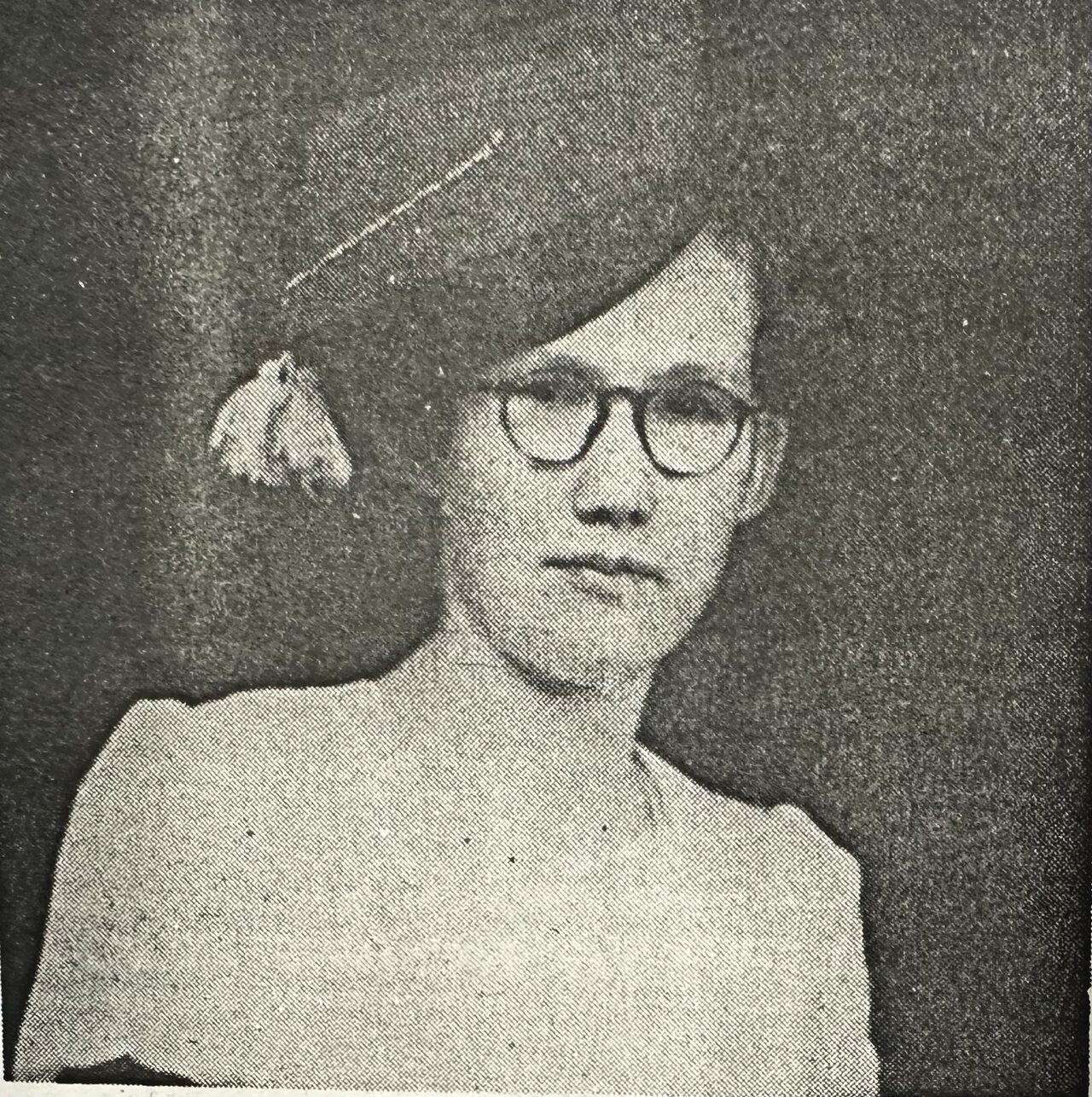
Miss Gollan on her graduation day. Dallas Gollan could trace her family history back to the birthplace of the Gollan Family – Gollanfield near Inverness in Scotland.
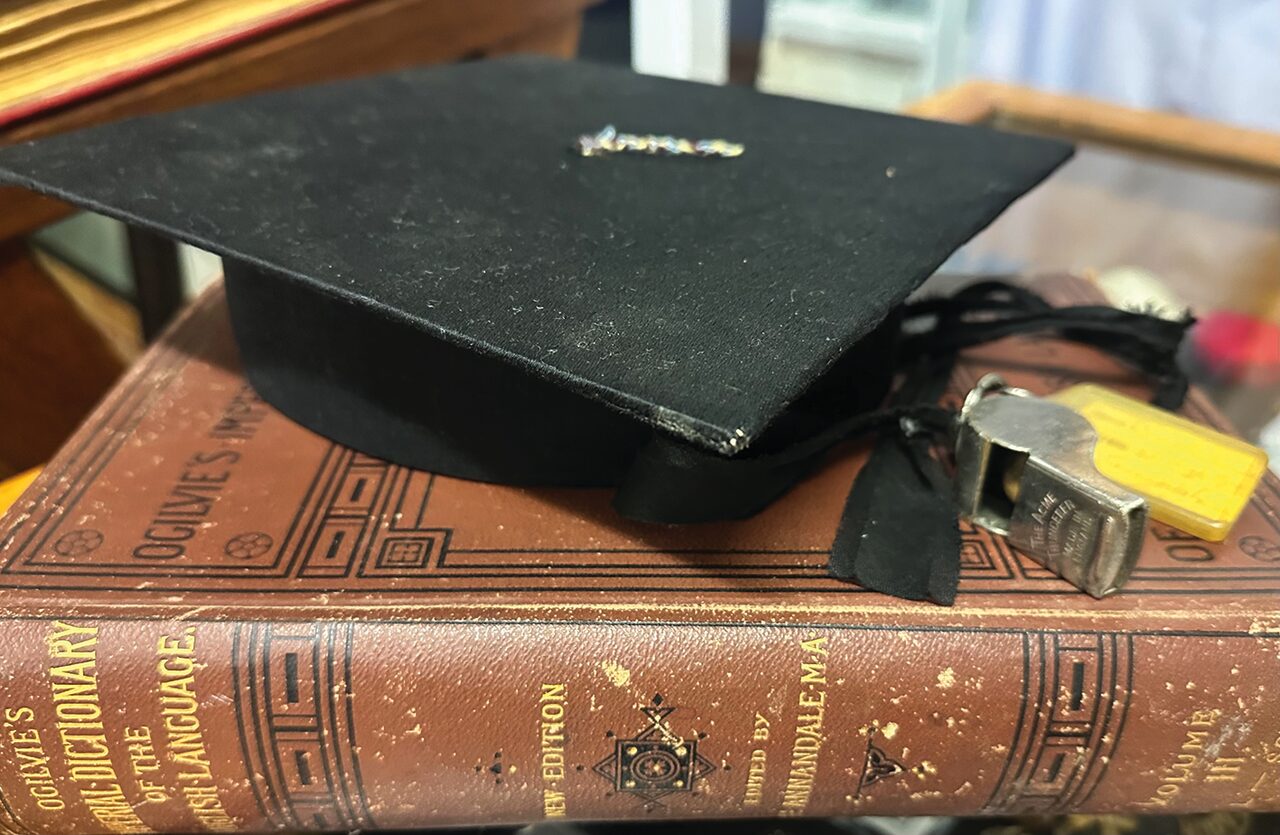
The graduation cap and playground whistle owned by Miss Gollan. Both are on display at the Water Tower Museum in Gunnedah.


