A candlelight vigil shone a powerful light on the reality of violence toward women and children in 2025.
The vigil marked the end of the 16 Days of Activism Against Gender-based Violence, which included the names of victims of domestic violence and intimate partner violence in 2025.
The initiative is a global one by the United Nations Women, its message so large it reached this section of the globe.
The campaign begins on November 25 each year, the International Day for the Elimination of Violence against Women, and runs until 10 December, Human Rights Day.
The Smithurst Theatre forecourt was decorated with the orange, which is the colour invited to be worn in solidarity. This was a collaborative initiative by Gunnedah Family Support, Gunnedah Shire Council and the Salvation Army.
Gunnedah Family Support’s Vanessa Hodges Schembri said people were gathered in solidarity for the victims of gender-based violence.
This year’s focus was on ending digital violence against women and girls, which had coincidentally lined up with the social media ban for children under 16.
“A lot of the evidence suggests [there are some online spaces] grooming young boys to facilitate violence against women and the way that technology is used to do that through eliciting photos and monitoring people’s whereabouts through a lot of apps,” Vanessa said.
“Women experience coercive control through technology so whether that be through their location, their purchasing, their contact with others being monitored or tracked and then being controlled or punished because of that.”
The RED HEART Campaign Memorial to Women and Children Lost to Violence documents each year’s death as a result of murder, manslaughter or neglect.
It recorded 64 Australian women killed and 26 Australian children. The women’s deaths are at a lower number compared to last year, which Vanessa said could be taken as a positive but there is still more to be done.
“I don’t know that we’re seeing a reduction in the rates of domestic and family violence or intimate partner violence that women are experiencing,” Vanessa said.
“I think regional areas in particular continue to be an issue.
“I think there’s some statistics that are suggesting it’s five times more likely to be an issue for a woman living in a regional community than it is for someone living in a bigger metropolitan centre.
“There’s been some great moves with the coercive control legislation in this state but we’ve still got a long way to go.”
She hopes that people take initiative to have conversations with each other, children and loved ones to help them understand what coercive control or domestic violence looks like.
“If they’re worried about a loved one, reach out, get some support, some advice from a service like Gunnedah Family Support,” she said.
“We’re really lucky we’ve got services in our community now that can assist a woman and her children to flee,” she said, also mentioning Lilly Pilly Women’s Refuge as an example.
“Don’t be afraid to bring it up.”
Vanessa had high praise for Deb Hilton, from Gunnedah Shire Council who was lead for the project.
Among others were Peter Hall from the Salvation Army, Karlee Longworth from Lilly Pilly Women’s Refuge.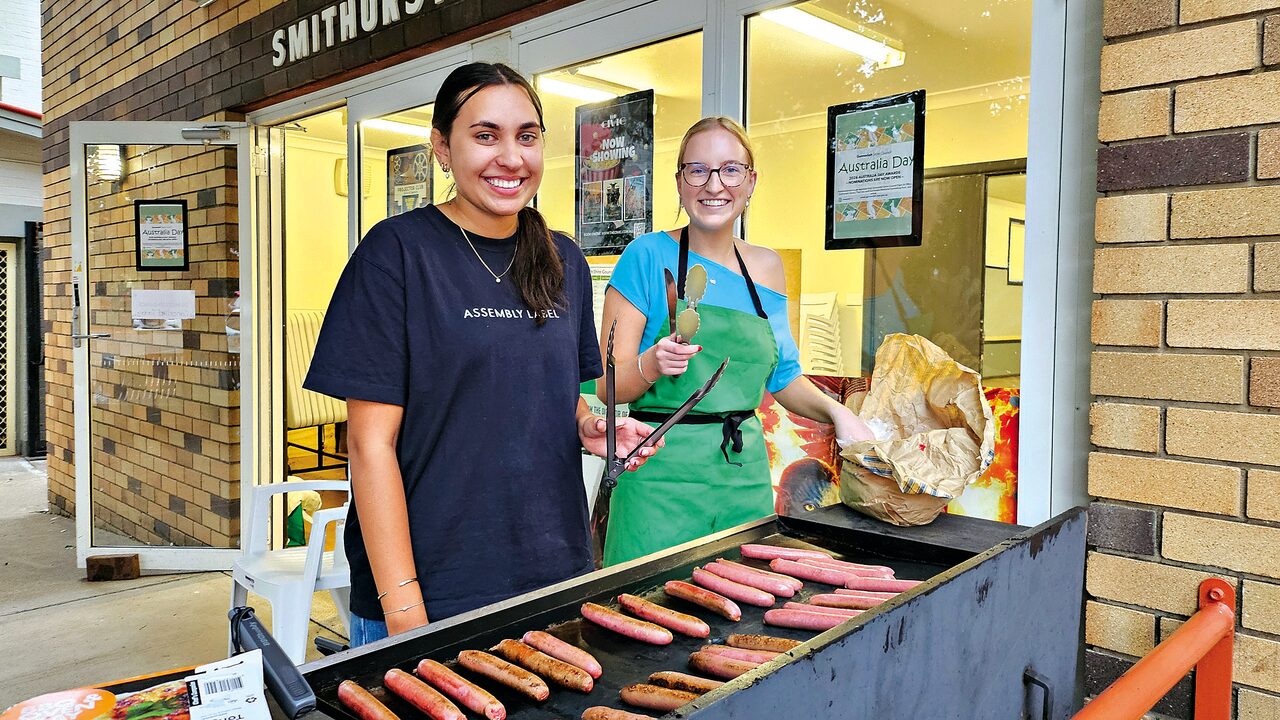
Aleesha Ward and Chloe Sumpter on the barbecue.
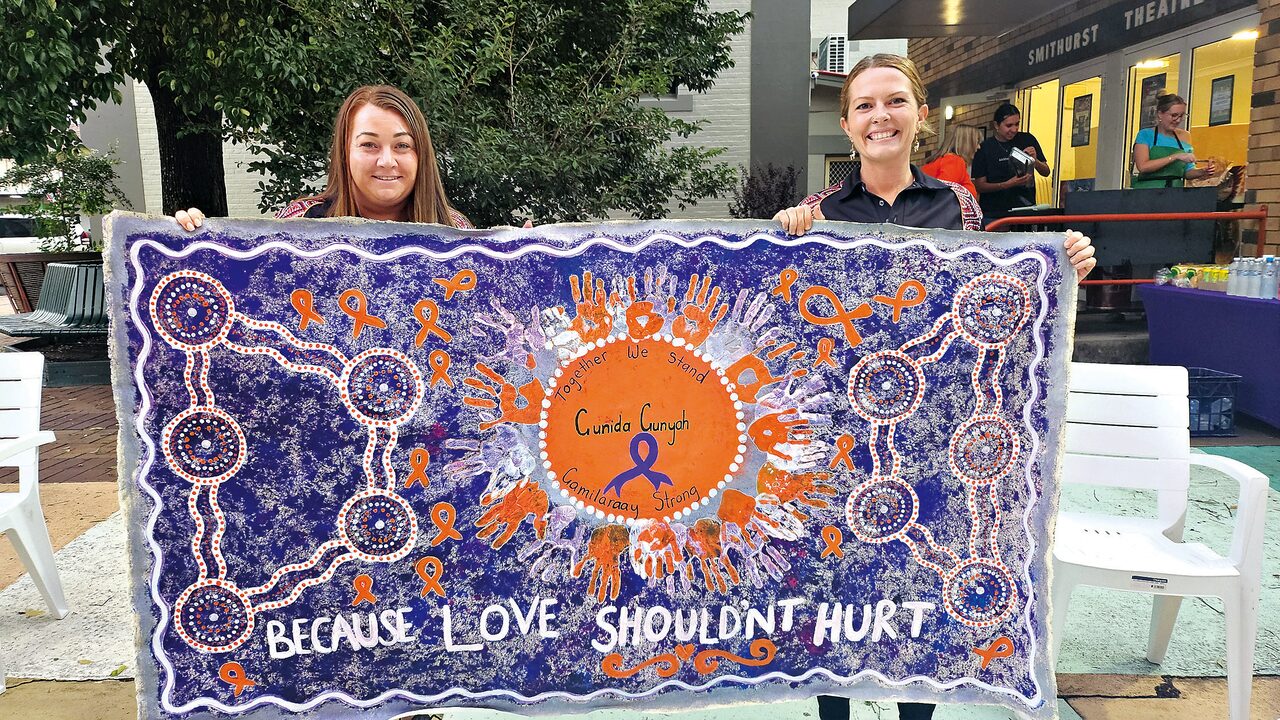
Gunida Gunyah invited the community to take part in creating this banner.