

FUNDING for a drought resilience planning program and road upgrades are among the key items for the North West region in the state budget handed down last week.
The state government announced continued funding for the $35m duplication of the New England Highway (Goonoo Goonoo Road) in addition to ongoing upgrades for the Newell Highway.
Liverpool Plains and Gunnedah Shire will receive $450,000 for the Regional Drought Resilience Planning program.
Narrabri’s Fish Farm will also benefit from $1.2m in funding to deliver a major expansion of onshore aquaculture and aquaponics operations.
The state government has also confirmed funds for ongoing projects including a PFAS water treatment plant in Narrabri and sealing upgrade to the Narrabri Shire portion of Rangari Road.
At a statewide level, relief is being provided to motorists and public transport users through lower registration costs and freezing Opal fares in addition to other cost-of-living measures.
Local members of parliament have welcomed the government’s investments across the shires that make up the North West but voiced concern with reduced spending in regional NSW.
Member for Barwon Roy Butler, whose electorate includes Narrabri Shire, said cost overruns on major Sydney infrastructure projects like metros and tunnels are hoovering up funds while his electorate suffers from decades of under-investment by both major parties.
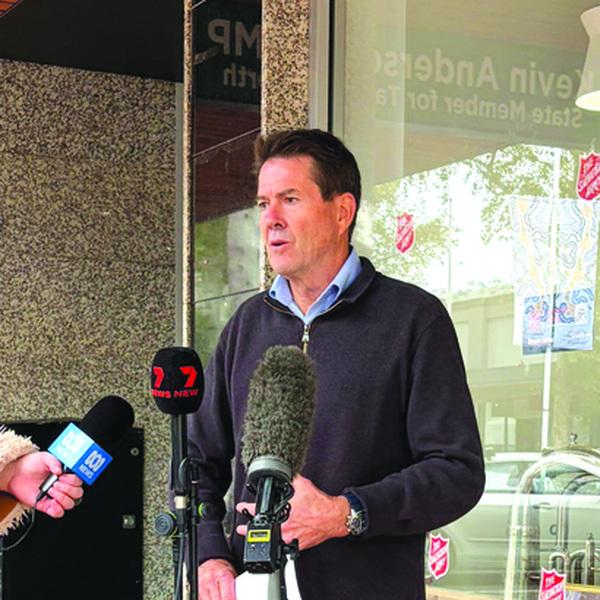
Member for Tamworth Kevin Anderson said the budget backed in his strong plan for the region, but missed the opportunity to fund important projects like housing, a new school for Moore Creek, and a return of the Mobile Phone Blackspot program.
“Given the difficult financial environment and the government’s efforts to move towards a surplus in coming years, we knew this budget would be tight,” Butler said.
“Some of the government’s cost-of-living measures – such as rebates on vehicle registration, energy and childcare – will help local people, but the toll roads relief and public transport fare freeze won’t do much in Barwon.
“And these token measures do nothing to address the major structural challenges faced by country people.”
Butler said last week’s budget proves the need for per-capita funding to be quarantined for regional areas rather than being diverted to cover cost overruns on major Sydney projects.
“While I’m pleased to see funding allocated towards continuing projects, the overall spend in regional areas is clearly far below what we should receive if funding was allocated on a per-capita basis,” he said.
“Around one-third of the state’s population lives in regional areas, but regional areas are not receiving one-third of the government funding.”
Member for Tamworth Kevin Anderson, who represents Gunnedah and Liverpool Plains shires in Macquarie Street, said he had been fighting hard to deliver funding for several projects that were included in this budget including allocation towards the Gunnedah Hospital, the Goonoo Goonoo Road upgrades, AVL facilities for Quirindi Courthouse and $21m for the Nioka palliative care unit.
Anderson said the budget backed in his strong plan for the region, but the Chris Minns-led Labor government had missed the opportunity to fund important projects like more housing, planning money for a new school for Moore Creek, and a return of the Mobile Phone Blackspot program.
“It was critical that funding for important community projects were included in the budget, but there is more work to do to deliver on our strong plan for the future of the region,” Anderson said.
“We are a growing community with a growing population and growing pressure on essential services. We need the government to support that growth and there’s more work to do to ensure our voice is heard.
“My plan for our electorate will take more than this budget to deliver. There is more work to do – Labor have pulled infrastructure funding away from the regions and diverted it to the city, and that is unacceptable.
“That’s why the NSW Nationals have announced a 25 per cent Regional Infrastructure Guarantee. The regions have 25 per cent of the population. We deserve 25 per cent of the state’s infrastructure budget.
“We will also bring back the popular $250 Regional Seniors Travel Card and deliver a $300m biosecurity plan to help farmers tackle exploding feral animal populations.”