


Three of the four highways leading out of Gunnedah are rated just two stars in terms of safety according to a new digital map released by Australian Road Assessment Program (AusRAP).
The interactive map shows the safety star ratings of more than 20,000 km of state and 15,000 km of regional roads.
Roads are rated from one-star (least safe) to five-star (safest) using a method that assesses road features that affect the risk of crashing and severity of crashes that occur. These star ratings are informed by detailed data on road characteristics, traffic volumes, and safety infrastructure to create star rating maps, from which safety plans can be developed.
According to AusRAP, NSW is “performing well” compared with other Australian states and territories, with more than 71 per cent of all road travel taken on state roads rated three or more. This is based on data captured over the past 10 years.
In the Gunnedah area, where most data was recorded in 2021, the Oxley Highway to Tamworth is rated three stars for the majority of travel.
The Kamilaroi Highway heading south between Gunnedah and Breeza has long stretches of two-star rated roadway. One section is rated one star.
It is a similar story to west between Gunnedah and Mullaley, with two-star stretches interspersed by three-star rated road.
The Kamilaroi Highway to the north between Gunnedah and Narrabri is among the worst the district with long sections of highway rated only two stars and some parts are only one star. However, a section of roadway near Gunnedah Saleyards is rated five stars.
Gunnedah’s Conadilly Street is rated as four stars.
According to AusRAP report, in all regions of NSW the largest category is three stars. NSW is working towards the national target of 80 per cent of all road travel in the state being taken on state roads rated three or more stars by 2030.
Despite the low ratings for Gunnedah’s road network, AusRAP said the targets don’t require all roads in NSW to become five-stars.
“The greatest benefit, in terms of the number of lives saved and serious injuries avoided per dollar invested, will most often be achieved by upgrading low star roads that carry high traffic volumes to at least three-star safety standard, rather than bringing four-star rated roads up to five stars,” the AusRAP report stated.
“In most cases, the biggest impact on road trauma comes from upgrading high-risk roads where people travel the most, resulting in reduced crash risk and trauma.
“Roads score higher star ratings for safety features like wider lanes, wider shoulders, crash barriers, divided dual carriageways, reflective markings and rumble strips. A five-star road has all these features.
“Lower star ratings don’t indicate roads are unsafe, but they provide an analysis of how well a road’s design helps prevent crashes or reduce their severity. These ratings help prioritise where safety improvements will have the greatest impact.
“Not all roads need to be five-stars, and not all one-star roads need to be upgraded in order to be considered fit for purpose.”
Rural roads are not alone in the low-ratings as much of the Sydney metropolitan road network is also rated between two and three stars.
According to the data, less than one per cent of NSW roads are rated five stars (such as new and high-speed roads) and represent the newest and busiest roads such as new or upgraded freeways and arterial routes.
Some 90 per cent of all road travel in NSW takes place on state roads rating two stars or more, with room to lift more roads to three stars through installing extra safety features.
A further 23.5 per cent of travel is on state roads are rated two stars and 3.8 per cent rated one star.
NSW Minister for Roads and Regional Transport, Jenny Aitchison, said the government is investing $2.8 million in road safety projects across the state.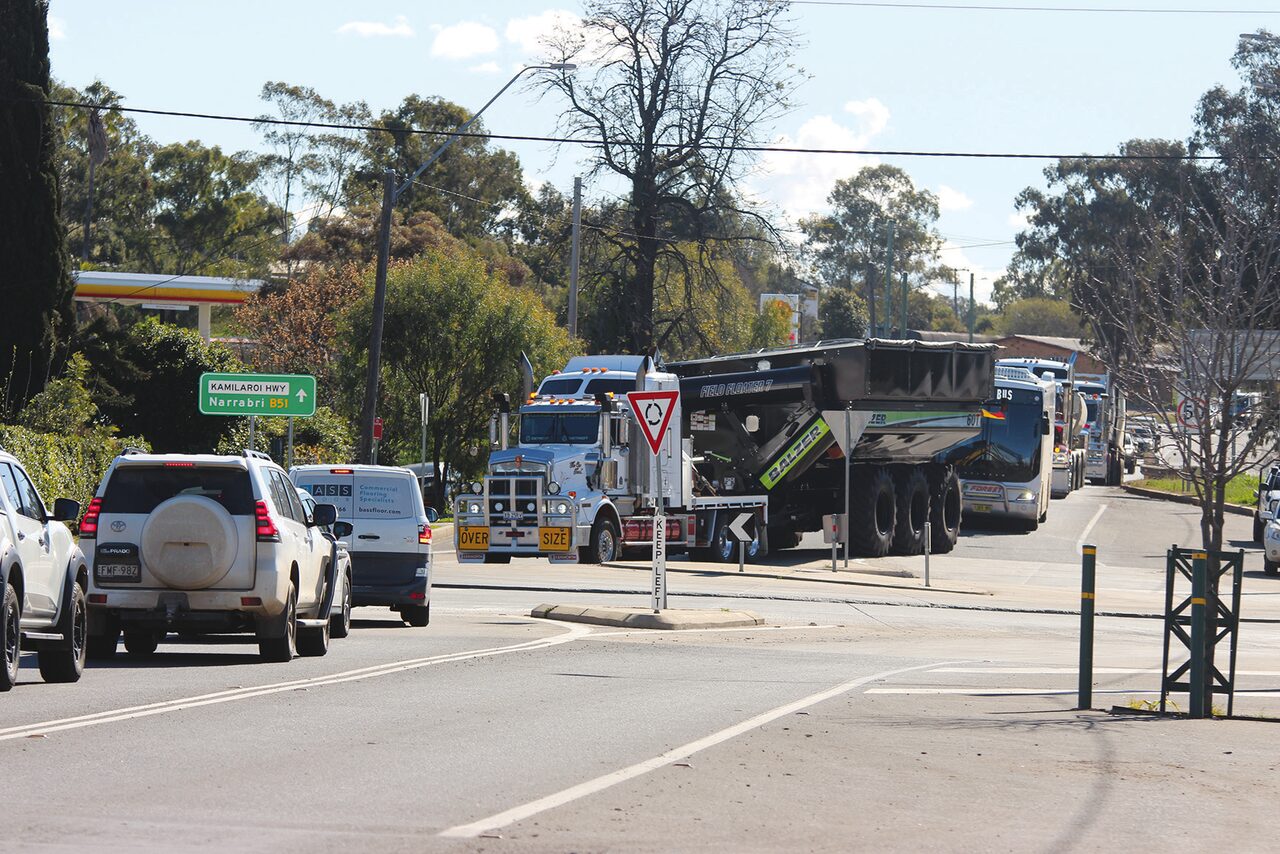
An oversized load negotiates the Kamilaroi Highway-Warrabungle Street roundabout in Gunnedah on Monday. The section of highway between Gunnedah and Narrabri is rated two stars for the majority of travel.


