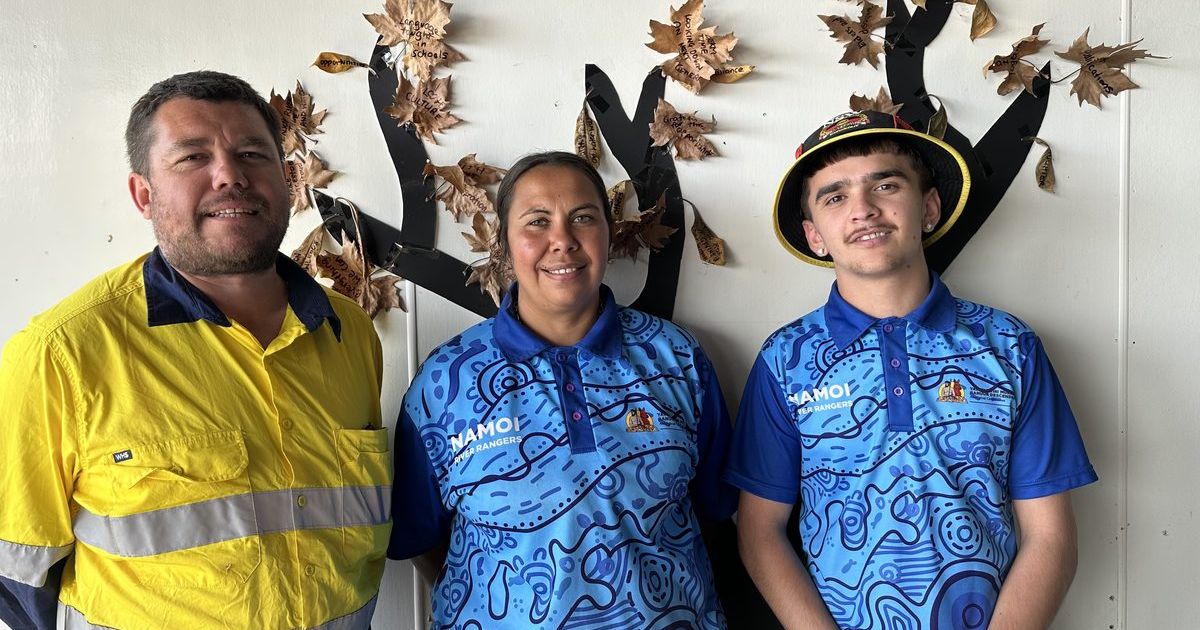
The Namoi River Rangers gathered with members of the Aboriginal community last week to celebrate the successful completion of a restoration project along the Namoi River.
Wade Natty was the contract manager for the project carried out under the umbrella of the Yawiriawiri Murri Ganuur Descendants Aboriginal Corporation (YMG) in Gunnedah.
“We applied for a grant through the Aboriginal Fisheries Trust and that enabled us to restore a 10km section of the Namoi River between Gunnedah and Boggabri, ending at Broadwater, which was a major camping and fishing area for our people,” Wade said.

“Floods and drought have had a huge impact on river banks and loss of fish habitat in the river so the aim was to restore native trees and grasses and rid the area of invasive weeds as well as releasing fingerlings into the river.
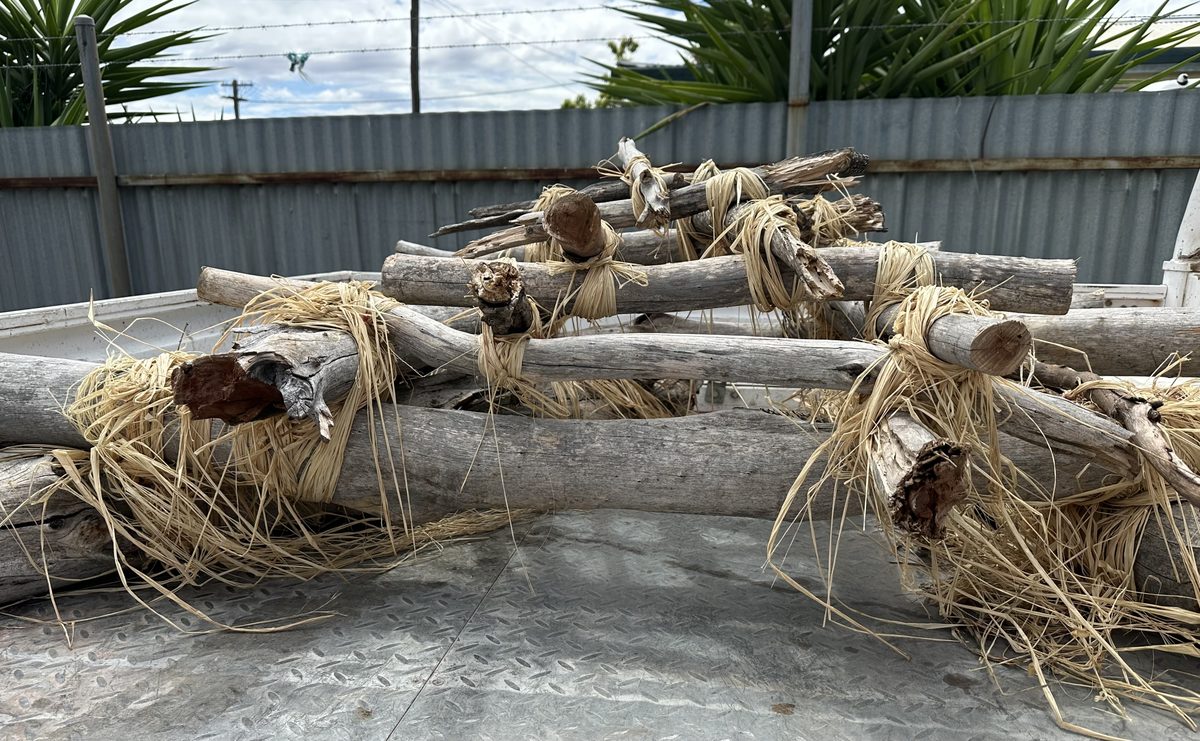
An example of the fish motels constructed and lowered into deep water holes in the river as a hide for fingerlings when they are released. LEFT: Fred Briggs inspecting weeds in the project area.
“The Namoi River Rangers project is grounded on Aboriginal connection to country waterways and culture and passing on knowledge and environmental practices to future generations.”
The project began on 10 March when the Rangers were introduced to the program which included training and planning as well as instruction in first aid and biodiversity undertaken with Red Chief Local Aboriginal Land Council.
Training was delivered by Local Land Services, with Whitehaven coming on board to fence any Aboriginal artifacts along the river so that they were not disturbed.
Native vegetation was sourced at Mr Hath’s Nursery before it closed and at Waterford Farm Native Tree Nursery, which specialises in advanced native trees, shrubs and ground covers.
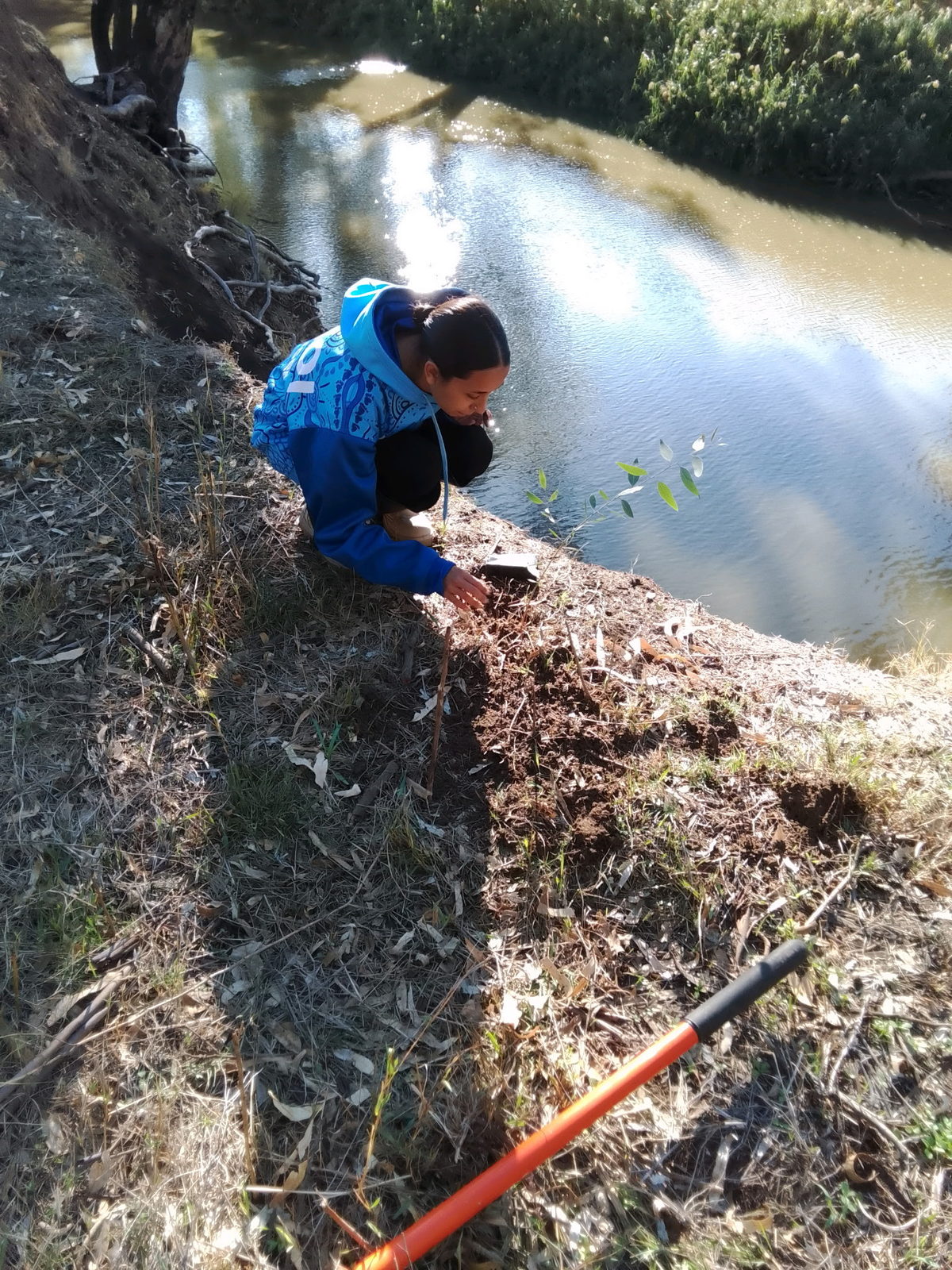
Jinaya Taylor planting a River Red Gum on the riverbank to help stabilise the bank and slow down erosion.
Using experience gained on a previous restoration project at Lake Keepit, the rangers planted more than 150 native trees and plants, including Red River Gums, Blakeley’s Red Gum, Pin Rush, Kangaroo Grass and other locally endemic grasses.
“The main focus area was a badly eroded section at Waterford that was washed away in the last floods,” Wade said.
“Native vegetation was planted to stabilise the river banks and there will be ongoing restoration and monitoring of plant growth and continued weed management across all project areas.”
The rangers worked with a local agronomist to identify weeds across the project areas including Noogoora Burr, alligator weed, lippia and Green Cestrum and were taught safe removal practices.
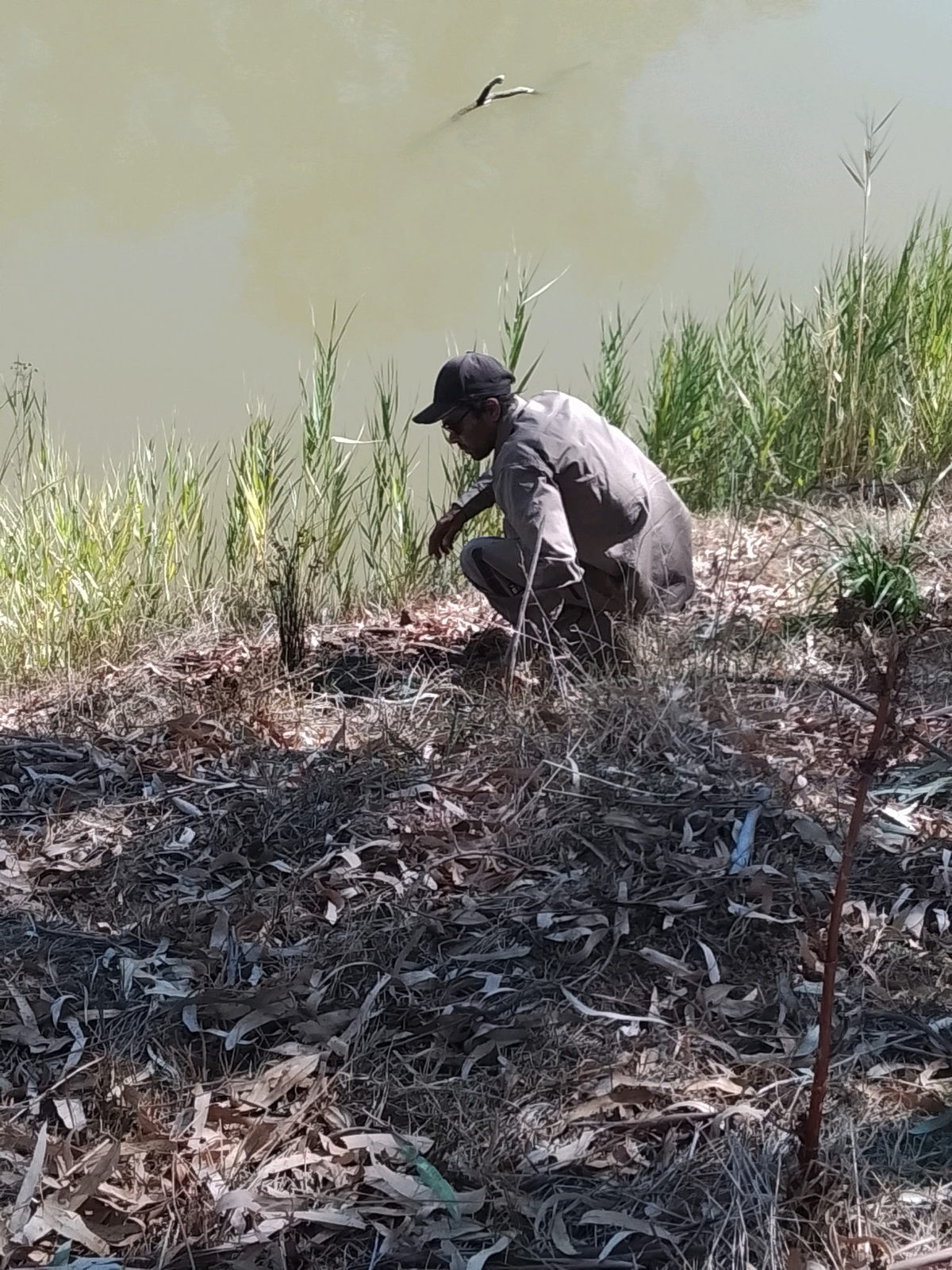
Fred Briggs inspecting weeds in the project area.
The construction of 20 “fish motels” was a great experience for the rangers, with local timber collected and used and installed at different locations across the project area to protect fingerlings from predators when they are released into the river.
“Bigger fish are the main predators of the fingerlings so the fish motels provide a place for them to hide,” Wade said.
“Overall, the project has been a great experience for the Namoi River Rangers with hands-on work in caring for Country, while developing practical environmental skills.
“Through training, native planting, weed management, riverbank restoration and the construction of fish habitat, the rangers contributed to improving the health and sustainability of the Namoi River and surrounding environment.”
To order photos from this page click here